Heartland Court Housing Estate Residents Protest Alleged Excessive Billing, Poor Energy Supply by TEDL

By Dan Opara
Residents of Heartland Court Housing Estate, located along Owerri/Port-Harcourt Road, Avu axis of Owerri West Local Government Area of Imo State, on Tuesday, March 17, 2026, staged a peaceful protest against the management of Transpower Electricity Distribution Limited, TEDL, formerly Enugu Electricity Distribution Company, EEDC, over alleged excessive electricity billing and poor energy (power) supply.

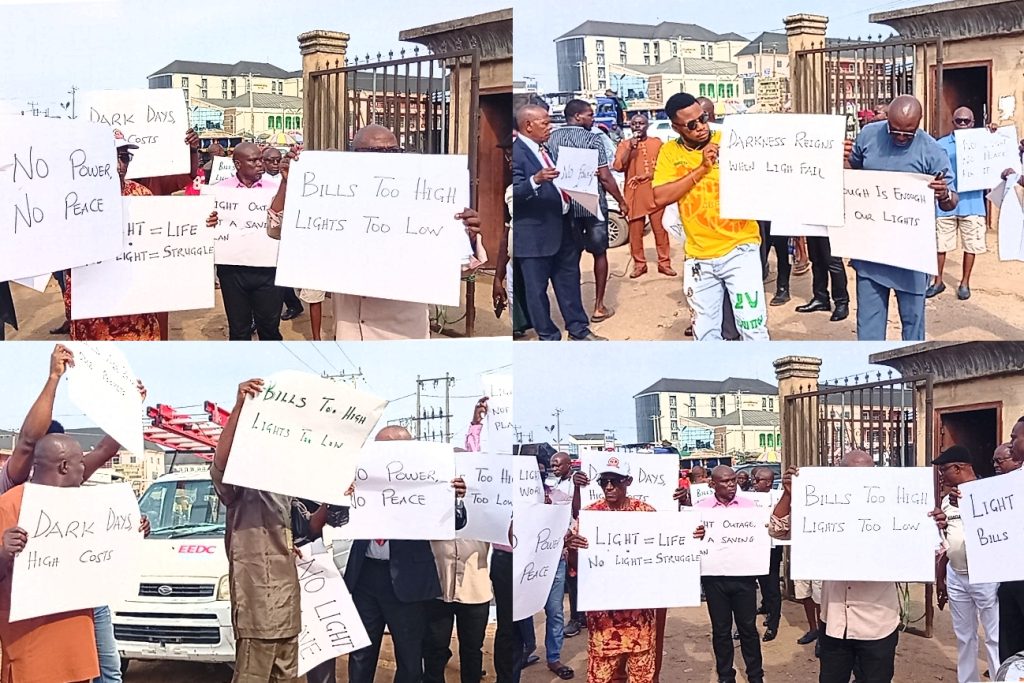
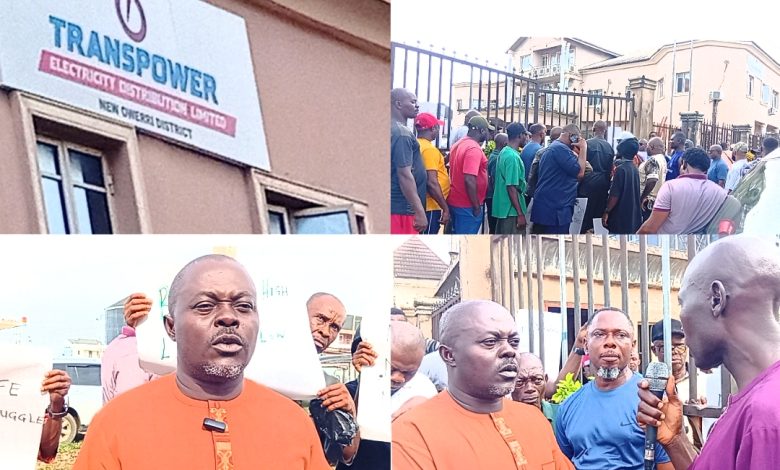
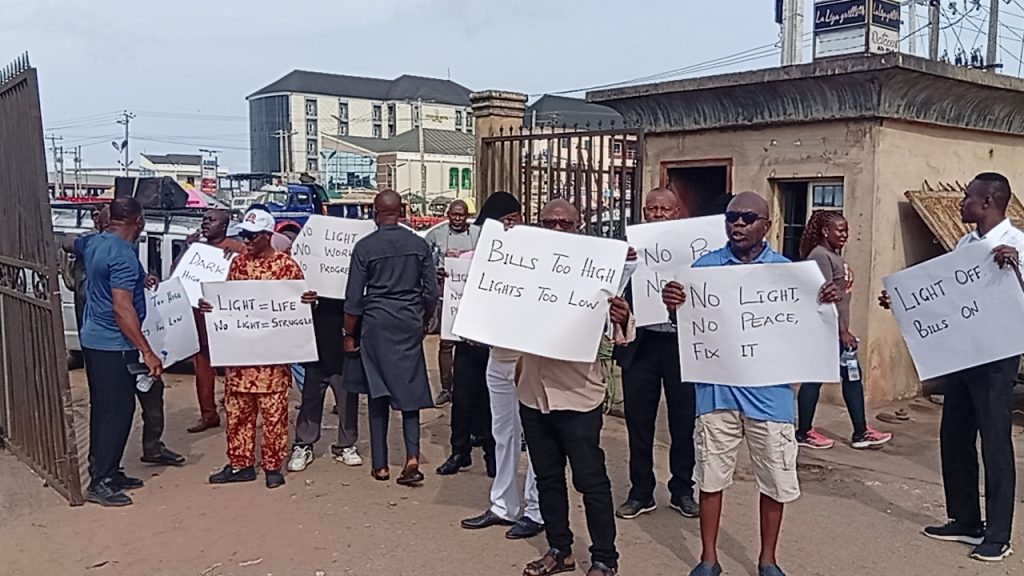
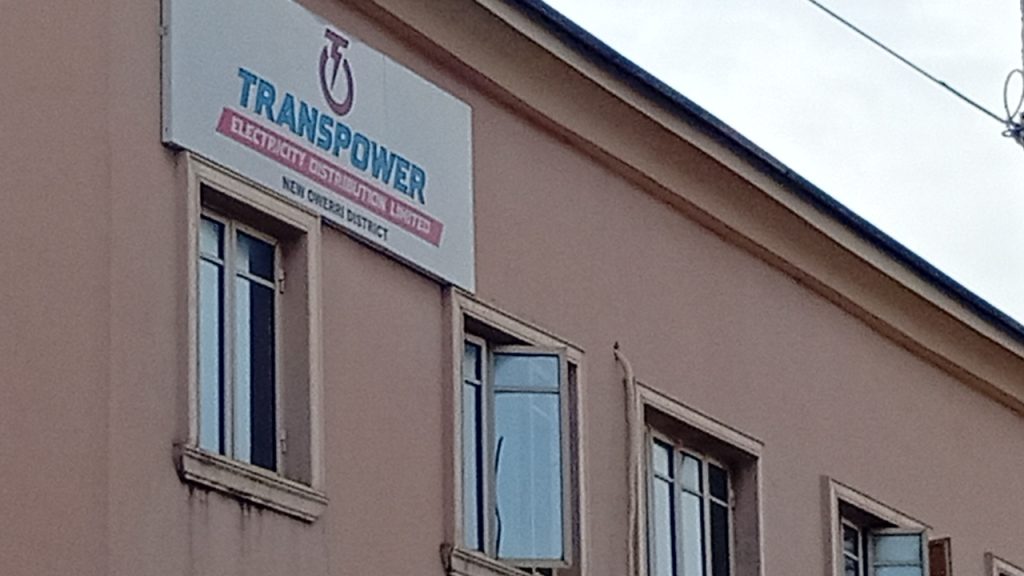
The angry residents converged at the entrance gate of the Transpower Electricity Distribution Limited TEDL, New Owerri Area, armed with various placards and chanting protest songs, as they expressed their frustration over what they described as persistent darkness in the estate despite receiving exorbitant electricity bills every month.
Many of the protesters accused the electricity company of imposing estimated bills that do not reflect their actual electricity consumption.
According to them, the situation has become unbearable as households that barely enjoy regular power supply are still being compelled to pay huge monthly bills.
Some of the placards displayed by the protesters bore inscriptions such as, “Light Off but Bill On,” “Bills Too High, Light Too Low,” “No Power, No Peace,” “Fix Our Light,” “Enough Is Enough,” “Bills Are Burning Our Pockets,” and “Dark Days but High Costs.”
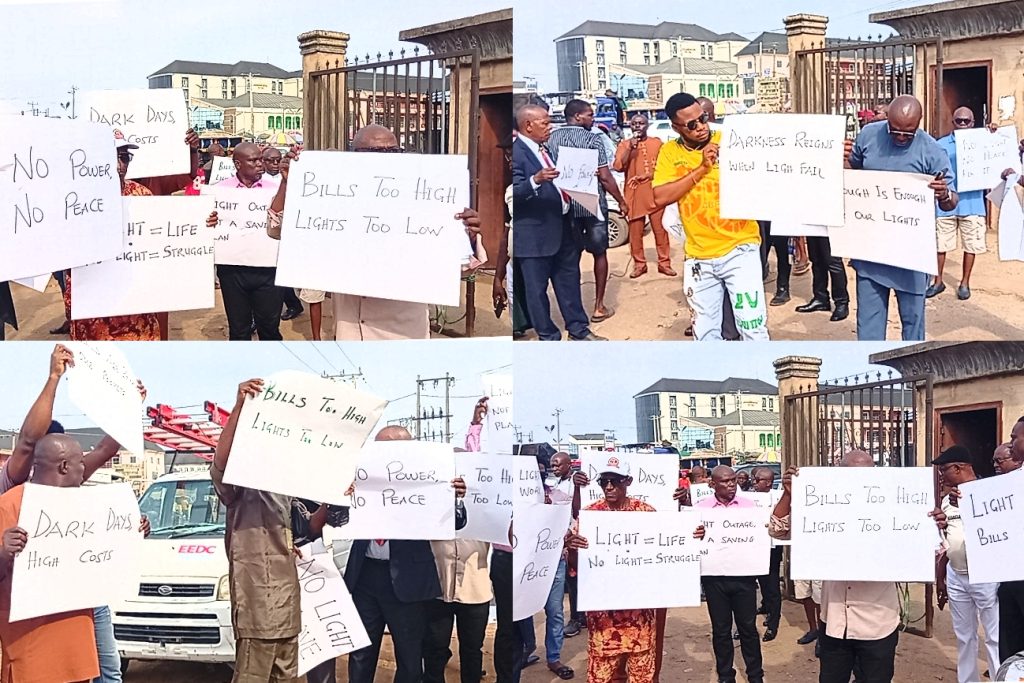
Speaking with journalists, including ThePressman Newspaper, the Chairman of Heartland Court Housing Estate, Avu, Engr. Prof. John Chukwuma Ezeh, expressed deep dissatisfaction with what he described as the continuous hike in electricity bills despite the absence of stable power supply.

According to Prof. Ezeh, residents of the estate have consistently fulfilled their obligations by paying their electricity bills as at when due, yet they are subjected to charges that are far above their actual energy consumption.
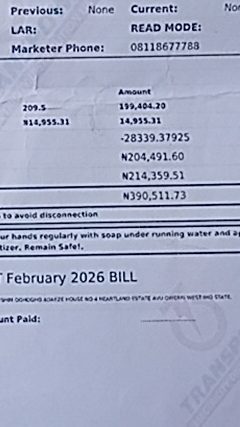
He lamented that the community has been living mostly in darkness, but at the end of every month the company still issues high bills to residents, a situation he described as unjust, unacceptable, and exploitative.
“We are no longer satisfied with the continuous increase in electricity bills being issued to us. Instead of cheating us with outrageous charges for power we do not receive, it would be better for them to disconnect us from the national grid,” Prof. Ezeh stated.
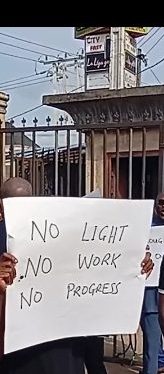
Also speaking during the protest, a resident of the estate and labour union official in Imo State, Comrade Okechukwu Charles Okere, condemned the billing system used by the electricity company, describing it as outrageous and exploitative.

According to Okere, some residents occupying three bedroom apartments currently receive electricity bills ranging from ₦99,000 to ₦214,000 monthly, despite the irregular supply of electricity to the estate.
“This is completely unacceptable. People are being asked to pay over ₦100,000, #115,000, or even ₦214,000 for electricity they never consumed.
That is the height of injustice and it must stop,” Okere said.
He further explained that residents are demanding transparency in the billing system, insisting that electricity bills should be calculated strictly based on the officially approved unit rate per kilowatt hour, which is #209.50k per unit, according to him.

Okere explained that electricity tariffs in Nigeria are calculated per kilowatt hour, which represents the cost of one unit of electricity consumed by customers.
According to him, consumers are expected to pay bills based on the number of units used rather than estimated figures.
The tariff structure in Nigeria operates under a band classification system that determines the number of hours of electricity supply customers should receive daily.
The labour leader therefore insisted that residents should only be charged according to the units of electricity actually consumed through transparent metering.
Another resident of the estate, Barrister Ogemdi Okoha, said the community has remained law abiding despite the frustrations they have endured from the electricity company.
According to him, residents regularly pay their electricity bills promptly, yet they continue to experience poor and epileptic power supply.
He further explained that the electricity distribution company classified the estate under the “Band A” category, which ordinarily guarantees customers a higher number of daily electricity supply hours.
However, Okoha said the reality on ground contradicts the classification, as the estate rarely enjoys up to five hours of electricity supply at a stretch.
He also lamented that repeated requests by residents for the installation of prepaid meters have not been addressed by the electricity distribution company, thereby leaving them vulnerable to estimated billing.
“We have asked them several times to provide prepaid meters so that we can pay exactly for what we consume, but they have refused to make them available.
As a community we do not want to take the law into our hands, but this situation is becoming unbearable,” Okoha said.
Another resident, Mazi Uzoma Ogu, also expressed anger over the situation, accusing the electricity company of exploiting residents through inflated bills.
According to him, the continuous issuance of high bills without commensurate power supply amounts to extortion and must be urgently addressed by the appropriate authorities.
During the protest, the residents demanded to meet with the Network Manager of TEDL to present their grievances, but he was not immediately available to address them.
However, a five member delegation from the protesting residents were later allowed to meet with officials of the company in a closed door meeting held inside the office complex.

Journalists were reportedly prevented from covering the meeting, as the management of the electricity company restricted media access to the discussion.
After the meeting, the leader of the protesters, Engr. Prof. John Chukwuma Ezeh, informed the residents that discussions had taken place with the management of the electricity distribution company and that the community would carefully monitor the outcome of the engagement before deciding on their next line of action.
Barrister Ogemdi Okoha, who was part of the delegation that attended the meeting, later disclosed that the officials of the electricity company attributed the poor power supply largely to challenges in electricity generation across the country.
He noted that the explanation did not fully address the major concerns raised by residents, particularly the issue of excessive billing despite inadequate electricity supply.
The protesting residents therefore urged the relevant government authorities and regulatory agencies to intervene in order to ensure fairness, transparency, and improved electricity service delivery to consumers.