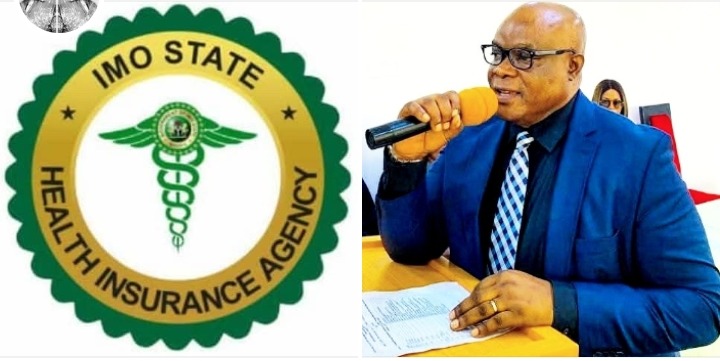
Imo Health Insurance: Our Target Is to Enrol 5 Million Beneficiaries, Says Executive Secretary, Hails Uzodimma


The Executive Secretary and Chief Executive Officer of the Imo State Health Insurance Agency (IMSHIA), Dr. Donald Osita Eneh, has disclosed that the agency is targeting the enrolment of five million beneficiaries in the state’s health insurance scheme.
Dr. Eneh described the enormous benefits of the programme as a major motivation for achieving the ambitious target, assuring residents of the agency’s commitment to providing accessible, affordable and quality healthcare services.
Speaking during a press conference at the agency’s office in New Owerri on November 16, 2026, as part of its ongoing public sensitisation efforts, Dr. Eneh explained that the primary objective of the scheme was to ensure that Imo indigenes and residents have access to equitable, comprehensive and quality healthcare services without suffering financial hardship.
He reiterated the agency’s commitment to adopting global best practices in the implementation of the programme, explaining that its beneficiary categories include civil servants, students in tertiary institutions, pensioners, operators in the informal sector and vulnerable groups.
According to him, the vulnerable groups covered under the scheme include elderly persons, pregnant women, children under five years and persons living with disabilities.
The IMSHIA boss commended Governor Hope Uzodimma for his goodwill in establishing the agency and his commitment to transforming the state’s healthcare system. He also pledged to take the agency to greater heights by building on the achievements of his predecessors.
“His Excellency, Distinguished Senator Hope Uzodimma, has demonstrated uncommon leadership, goodwill and care for the health needs of Imolites through this wonderful initiative and his other healthcare intervention programmes across the state,” he said.
He cited the ongoing upgrading of public health facilities across the state as one of the governor’s notable interventions in the healthcare sector.
Describing the Imo health insurance programme as a model worthy of emulation by other states, Dr. Eneh disclosed that the N15,000 and N7,500 insurance premiums paid by operators in the informal sector and students in tertiary institutions under the ImoCare scheme remained among the cheapest in the country.
He further explained that the state government had taken responsibility for the insurance premiums of civil servants and pensioners under the programme.
On the benefits of the scheme, Dr. Eneh stated that subscribers enjoy access to medical consultations, surgeries, referrals, medical investigations and treatments for health conditions covered under their respective insurance packages.
He emphasised that the agency was committed to ensuring professionalism, efficiency, accountability, sustainability and optimal service delivery through its engagement with healthcare providers.
According to him, the process involves accreditation, regular monitoring, evaluation, quality assurance and medical audits to ensure that funds paid to participating hospitals are properly utilised and that the rights of patients are fully protected.
The Executive Secretary also clarified that beneficiaries under the premium package are not expected to make out-of-pocket payments for covered medical services, except for a 10 per cent co-payment on prescribed drugs, which he described as a standard practice in health insurance administration globally.
Dr. Eneh further maintained that the agency prioritises the rights and welfare of beneficiaries through various feedback and complaint mechanisms designed to prevent exploitation, mistreatment and illegal charges for services already covered under the scheme.
He urged beneficiaries to promptly report cases of maltreatment or improper charges by participating hospitals to enable the agency to investigate and sanction erring healthcare facilities.
On the relationship between the agency and participating hospitals, he assured that IMSHIA would sustain its diligent approach to handling capitation payments and medical claims, stressing the importance of proper governance, verification and adjudication processes in ensuring accountability and the long-term sustainability of the scheme.
Dr. Eneh called on Imolites to take advantage of the programme by enrolling in the health insurance scheme and benefiting from its provisions.
He also solicited the support and partnership of associations, faith-based organisations, trade unions and Imo indigenes in the diaspora to help expand the programme’s reach and achieve its five-million-beneficiary target.
He assured residents that the agency would deliver improved services in the coming days following its ongoing restructuring exercise, which includes the planned digitalisation of its operations and administrative processes.