By Dan Opara
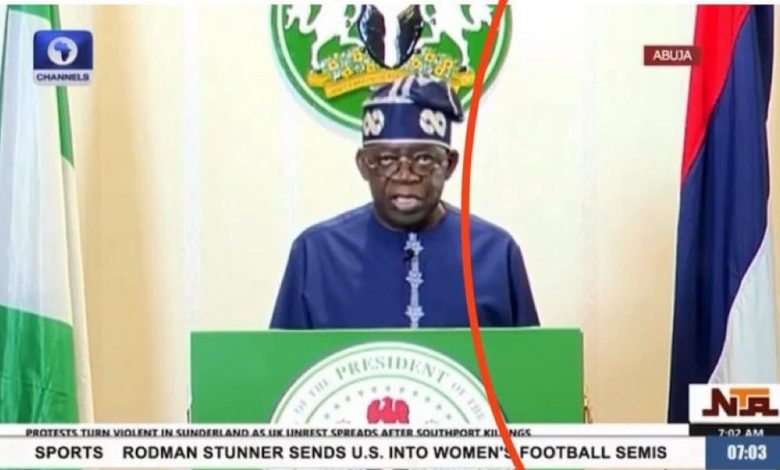
The prominent display of a Russian flag in the office of Nigeria’s President, Dr. Bola Ahmed Tinubu, carries significant symbolic weight and can be interpreted in several ways, contingent on the surrounding context.
Firstly, the presence of the Russian flag could be a testament to diplomatic relations.
It may serve to underscore the robust diplomatic ties between Nigeria and Russia, reflecting mutual respect and the recognition of each nation’s sovereignty and interests.
Secondly, the flag might denote a state visit.
In this scenario, it signifies the presence of a Russian official or delegation, symbolizing the hospitality extended by Nigeria to its foreign guests.
Such displays are common during high-level visits to honor the dignitaries and foster a welcoming atmosphere.
Moreover, the flag could be emblematic of international cooperation.
It may highlight ongoing or planned collaborations between Nigeria and Russia in various fields such as trade, defense, education, and technology.
This interpretation emphasizes the practical and strategic partnerships that benefit both nations.
Additionally, the Russian flag might be seen as a symbolic gesture of goodwill and solidarity.
This could be particularly relevant in times of shared global challenges or joint initiatives, reflecting a united front and mutual support.
However, the presence of a foreign flag in the office of a national leader can also be perceived negatively.
It might raise concerns about undue influence or interference in domestic affairs.
Critics could argue that such a display suggests a level of foreign involvement that compromises national sovereignty.
It may also be viewed as a sign of political alignment that could alienate other international partners or domestic constituencies who have differing views on Russia’s global actions.
Ultimately, the interpretation of the Russian flag in President Tinubu’s office is deeply contextual.
Its meaning is shaped by current events, diplomatic activities, and the broader geopolitical landscape.
Whether seen as a positive symbol of cooperation or a point of contention, it undeniably draws attention to the complex and multifaceted nature of international relations.