The Catholic Church, one of the oldest and most influential institutions in human history, now faces a momentous decision following the death of Pope Francis.
As the global Catholic community mourns the passing of its spiritual leader, questions naturally arise: Who will be the next Pope? And more pointedly, could the next pontiff be African?
Understanding the “White Pope” and “Black Pope” Titles
The terms “White Pope” and “Black Pope” are often misinterpreted. The “White Pope” refers to the sitting Pope—the Bishop of Rome and supreme head of the Roman Catholic Church—who dons a white cassock and leads more than 1.3 billion Catholics worldwide.
In contrast, the “Black Pope” is an informal term used for the Superior General of the Society of Jesus (Jesuits), owing to the traditional black attire worn by Jesuits and the significant, albeit behind-the-scenes, influence he holds within the Church. The title has no racial connotation.
Historical Context: African Popes of the Past
Historically, three Popes hailed from Roman North Africa: Pope Victor I (c. 189–199 A.D.), Pope Miltiades (311–314 A.D.), and Pope Gelasius I (492–496 A.D.).
Though geographically African, these early Popes were part of the Roman Empire and culturally Roman—quite distinct from Sub-Saharan Africans.
To date, the vast majority of the over 260 Popes have come from Europe, especially Italy.
Others have come from countries like Germany, France, Spain, Poland, and most recently, Argentina.
Pope Francis made history as the first Jesuit Pope, the first Pope from Latin America, and the first non-European in over a millennium.
The Growing Global Face of Catholicism
While Europe has historically dominated the papacy, the Church’s demographics are shifting.
Africa, Latin America, and Asia now boast some of the fastest-growing Catholic populations. Despite this growth, the Church has yet to elect a Sub-Saharan African Pope.
Could that change with the next conclave?
The Papal Election Process
The process of choosing a new Pope is both spiritual and secretive.
When the papacy becomes vacant—whether due to death or resignation—the College of Cardinals convenes in a conclave to elect the next Bishop of Rome.
The decision is believed to be guided by the Holy Spirit and not dictated by public campaigns or popularity.
While no one can predict with certainty who the next Pope will be, several high-profile Cardinals are frequently considered papabile—a term for those seen as plausible candidates for the papacy.
Notable Papal Contenders
Cardinal Peter Turkson
Origin: Cape Coast, Ghana
Credentials: Former President of the Pontifical Council for Justice and Peace.
He is widely respected for his intellect, humility, and advocacy for global social justice. Cardinal Turkson has long been considered a leading African candidate.
Cardinal Luis Antonio Tagle
Origin: Manila, Philippines
Credentials: Former Archbishop of Manila and current Prefect of the Congregation for the Evangelization of Peoples.
Known for his youthful energy, charismatic presence, and strong connection to the Asian Catholic community.
Cardinal Robert Sarah
Origin: Ourous, Guinea (West Africa)
Credentials: Former Prefect of the Congregation for Divine Worship and the Discipline of the Sacraments.
A deeply spiritual figure with a conservative theological stance, Cardinal Sarah is admired for his unwavering defense of traditional Church doctrine.
Cardinal Christoph Schönborn
Origin: Skalken, Czechoslovakia (modern-day Czech Republic)
Credentials: Archbishop of Vienna and a major contributor to the Catechism of the Catholic Church.
He is known for his scholarly depth and theological clarity.
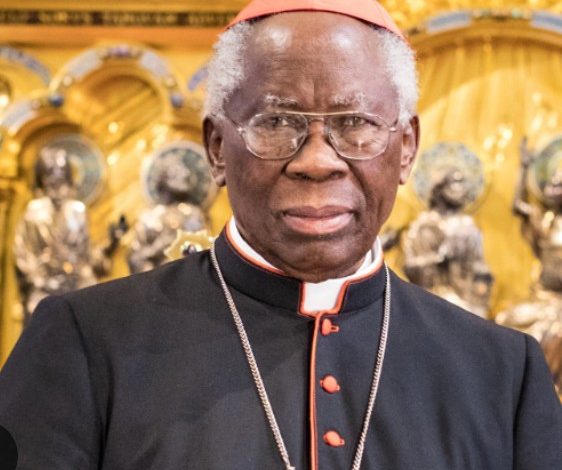
A Special Mention: Cardinal Francis Arinze
One of the most revered African Cardinals in Church history is Cardinal Francis Arinze, born in Eziowelle, Anambra State, Nigeria, on November 1, 1932.
A convert from traditional Igbo religion, he was ordained in 1958 and became the youngest bishop in the world at age 32.
He rose through the Church’s ranks to serve as Prefect of the Congregation for Divine Worship under Pope John Paul II.
Cardinal Arinze was widely regarded as a strong contender during the 2005 conclave that ultimately elected Cardinal Joseph Ratzinger as Pope Benedict XVI, who later resigned due to his old age.
Despite not being chosen, Arinze remains a towering figure in the global Catholic community.
A Historic Moment: The Passing of Pope Francis
Pope Francis, the 266th Pope and a transformative figure in the modern Church, passed away peacefully on Easter Monday, April 21, 2025, at Domus Sanctae Marthae in Vatican City. He was 88 years old.
The announcement was made by Cardinal Kevin Farrell, the Camerlengo, via Vatican Media at 9:45 AM, two hours after his passing.
His 12-year papacy was marked by efforts to reform the Vatican, champion the poor, and promote dialogue between faiths.
With his death, the Church enters a new phase of reflection and anticipation.
The Road Ahead
The next Pope may well emerge from the global South, signaling a new era in the Church’s leadership.
Figures like Ghana’s Peter Turkson, the Philippines’ Luis Tagle, Hungary’s Peter Erdo, and even long-respected African voices like Francis Arinze and Robert Sarah are being watched closely.
Yet, as history has shown, the Catholic Church often surprises the world.
The next Pope will not only inherit a 2,000-year-old legacy but also bear the hopes of a dynamic, diverse, and rapidly evolving global Church.
Written By Deacon Daniel Opara (Danjay),
From: ThePressman Newspaper www.thepressman.com.ng
+234(0)7030811559.