Uzodimma Demolishes Pedestrian Bridge Built By Okorocha In Owerri…yes, it’s a useless project, says Imo people

By Dan Opara
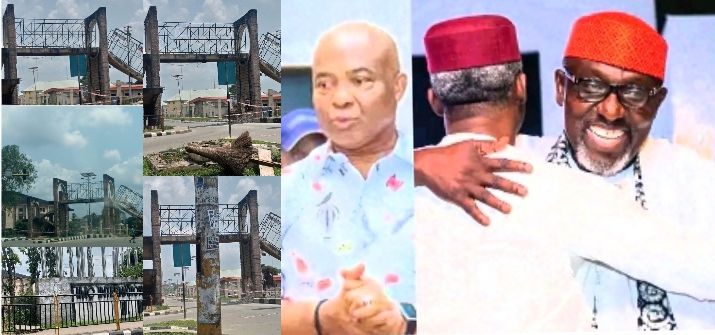
In a laudable move aimed at revamping infrastructure in Imo State, Governor Hope Uzodimma has demolished a pedestrian bridge constructed by former Governor Rochas Okorocha.
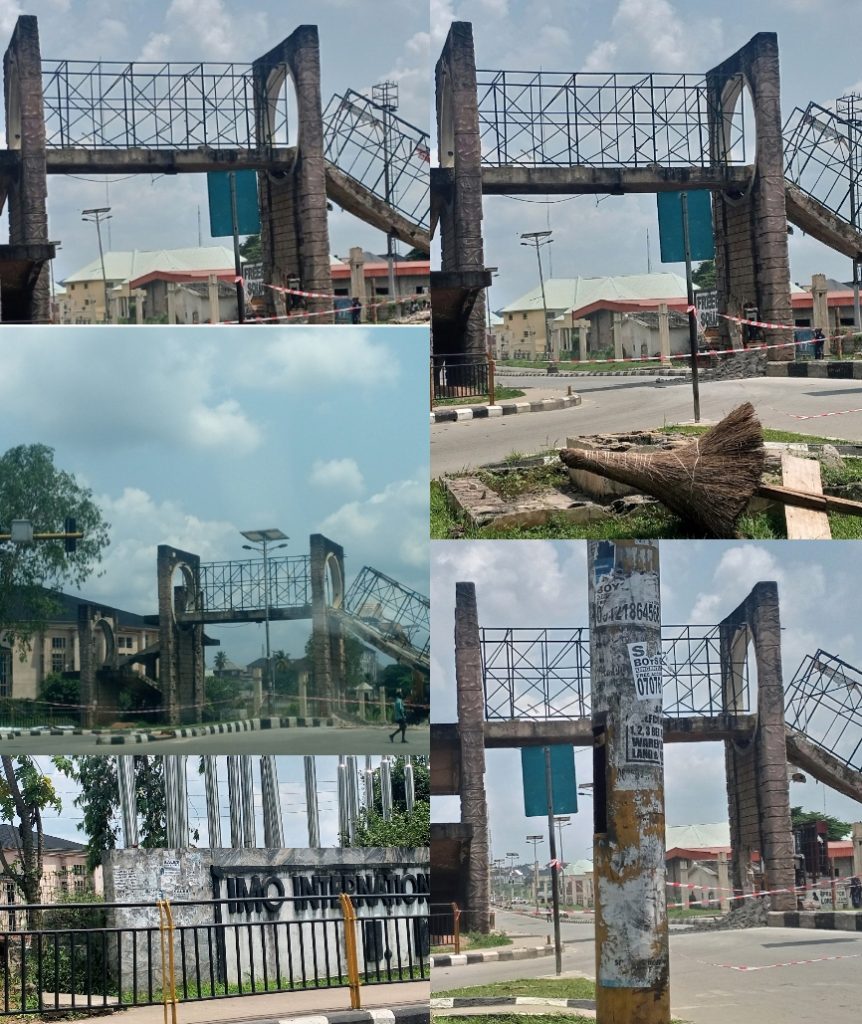
The bridge, located at the popular Warehouse Junction (Orlu Road Junction) in Owerri Municipal, was dismantled and demolished as part of Uzodimma’s broader initiative to address neglected and underutilized projects.
According to ThePressman Newspaper, which witnessed the demolition, the bridge was a high-cost project from Okorocha’s Rescue Mission Administration.
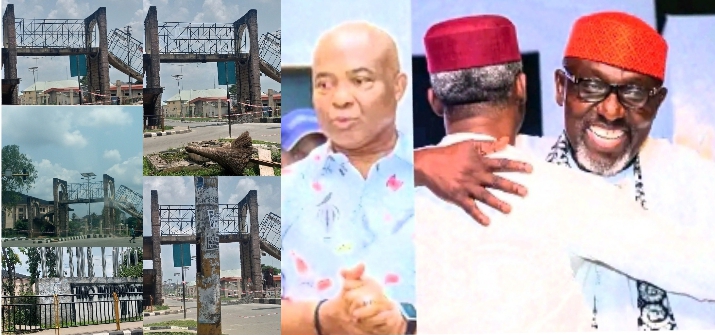
Okorocha, who governed Imo State for eight years before serving a four-year term in the Senate, had overseen the construction of this bridge.
Owerri residents, who spoke anonymously for security reasons, expressed their views on the project’s lack of utility.
They characterized the bridge as a financial misstep rather than a valuable infrastructure asset. “This structure has no economic value,” one resident commented.
“Let Governor Uzodimma dismantle it. Rochas used some of these ineffective projects to siphon significant amounts of money.”
Furthermore, residents have urged Governor Uzodimma to address other neglected infrastructure issues in the state.
They pointed out two abandoned bridges initiated by former Governor Sir Godson Ikedi Ohakim at Orji-Uratta and Amakaohia-Uratta in Owerri, which were later completed by Okorocha.
According to residents, these bridges have become hazards and require urgent rehabilitation.
“These bridges have become death traps,” an Imo man asserted.
“Immediate action should be taken to restore them. However, the pedestrian bridge behind the former IICC is a waste of resources and should be demolished. It has never served its intended purpose.”
While the demolition of Okorocha’s pedestrian bridge marks a significant step in Uzodimma’s infrastructure reform, it also highlights ongoing concerns regarding other neglected projects and the need for a comprehensive review of past administrative decisions.