
I Always Go Home Every Month With #21 Million Like Other Senators In Nigeria, Says Sen.Kuwa Sumaila

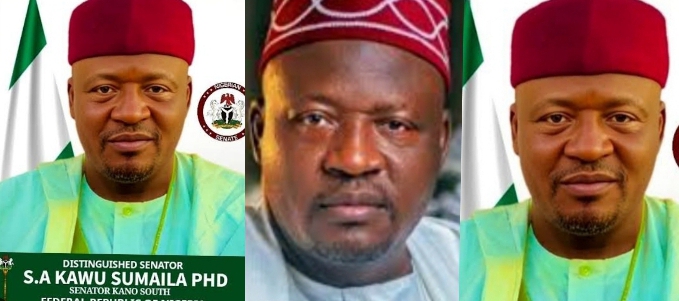
Alhaji Kawu Sumaila, the Senator representing Kano South, has disclosed the financial details of his monthly earnings in a recent interview with BBC Hausa.
Sumaila revealed that his basic monthly salary is under N1 million, which, after deductions, amounts to just over N600,000.
However, when considering additional running costs, each senator, including Sumaila, receives a total of approximately N21 million per month.
This disclosure comes at a time of heightened scrutiny over the compensation of Nigerian lawmakers.
Former President Olusegun Obasanjo recently criticized senators for allegedly adjusting their salaries and allowances in defiance of recommendations from the Revenue Mobilisation Fiscal Allocation Commission (RMAFC).
Obasanjo also suggested that senators receive unauthorized incentives from the presidency.
The Senate’s spokesperson, Yemi Adaramodu, denied these allegations but did not provide specific figures regarding the total monthly earnings of senators. Meanwhile, RMAFC Chairman Muhammed Shehu clarified that each senator officially earns N1,063,860 monthly.
This amount includes a basic salary of N168,866.70, and various allowances for vehicle maintenance, personal assistants, domestic staff, entertainment, utilities, newspapers, wardrobe, house maintenance, and constituency expenses.
Nigerian law, specifically the “Certain Political, Public and Judicial Office Holders (Salaries and Allowances, etc.) (Amendments) Act, 2008,” covers the salaries and allowances of public officials but does not account for running costs.
Consequently, the National Assembly has the discretion to determine and disclose these costs.
In the past, former senator Shehu Sani revealed that in 2018, lawmakers received N13.5 million monthly for running costs in addition to N750,000 in salary and allowances.
This revelation led to controversy, but RMAFC maintained that only the National Assembly Service Commission could provide precise details on running costs.

The ongoing debate reflects broader concerns about transparency and the appropriateness of legislative compensation in Nigeria.




