


In a recently surfaced viral video, Nigeria’s historical approach to dealing with criminals is starkly contrasted with contemporary political leadership.
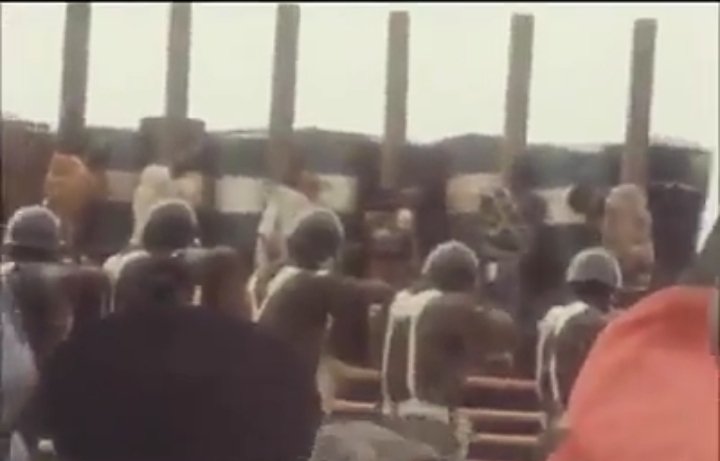
The footage vividly captures the execution of Ishola Oyenusi and his 7-Man Gang in 1971, reminding viewers of a time when justice for severe crimes was swift and decisive.
Ishola Oyenusi, a notorious figure in Nigeria’s criminal history during the 1970s, earned infamy through audacious acts of violence and theft.
His criminal exploits, which included daring bank robberies and car thefts, instilled widespread fear among the Nigerian populace.
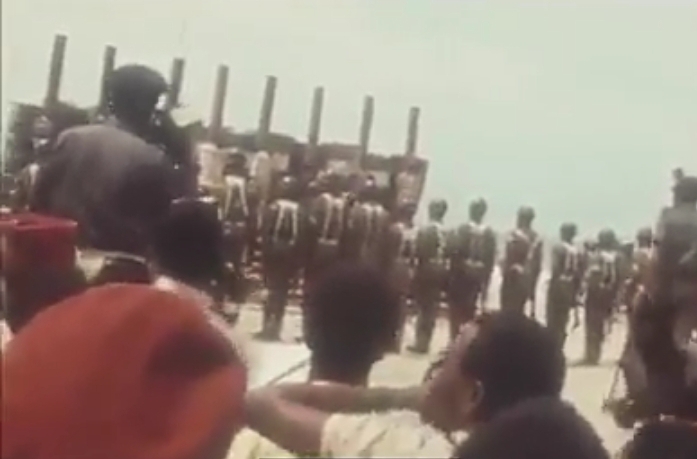
Following a prolonged pursuit, Oyenusi was apprehended by Nigerian authorities in March 1971.
Subsequently, he faced trial and was convicted of his numerous crimes. On September 8, 1971, Ishola Oyenusi, along with several members of his gang, met their fate before a firing squad—a dramatic culmination of their reign of terror.
The execution of Oyenusi symbolizes an era when maintaining the integrity of family names and upholding societal order were paramount.
It served as a clear deterrent against criminal activities that threatened public safety and stability.
However, the current discourse reflects a perceived departure from these principles.
Many lament the contrast between the stringent justice system of the past, exemplified by Oyenusi’s fate, and the perceived leniency towards corruption and misconduct among contemporary political leaders.
As Nigeria navigates its complex socio-political landscape, the legacy of Ishola Oyenusi and his era continues to provoke reflection on justice, accountability, and the evolving nature of societal norms.
The hope remains that these reflections will guide the nation towards a future where justice and integrity prevail.
Authored by Dan Opara, for archival purposes.




