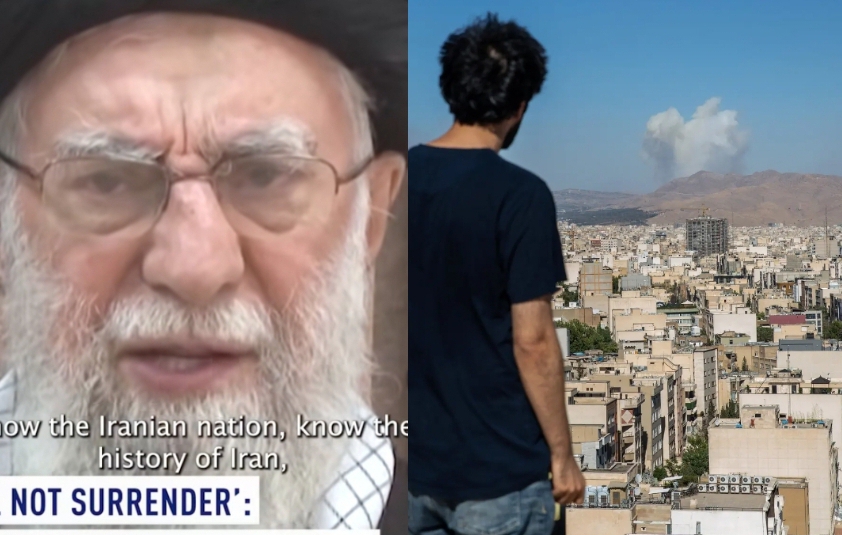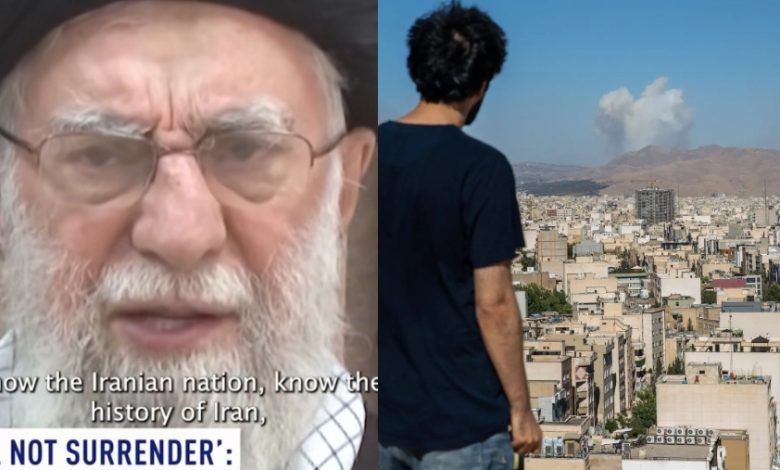
In a defiant televised address on Wednesday, June 18, Iran’s Supreme Leader, Ayatollah Ali Khamenei, firmly rejected U.S. President Donald Trump’s call for Iran’s “unconditional surrender” amid the intensifying war between Israel and Iran.
Khamenei cautioned that any American military intervention would result in “irreparable damage,” urging those familiar with Iranian resilience, history, and pride to refrain from using threats against the nation.
“The Americans must understand that any military action against Iran will lead to consequences they cannot undo,” Khamenei stated.
“Those who know this country’s people and history know that Iran will never bow to threats.”
Khamenei’s speech came a day after President Trump hinted at the possibility of targeting the Supreme Leader himself but quickly backtracked, saying, “at least for now.”
Still, Trump left the door open regarding U.S. involvement in the conflict, stating cryptically, “Nobody knows what I’m going to do.”
While verbal exchanges escalated, conflicting signals emerged on the diplomatic front.
Trump claimed Iranian officials had reached out, suggesting talks might occur.
Yet, Iran’s mission to the United Nations dismissed such claims, condemning Trump’s threats as “cowardly” and stating that Iran “does NOT negotiate under duress.”
Nevertheless, an unnamed senior Iranian Foreign Ministry official indicated a willingness to engage in talks.
He disclosed that Foreign Minister Abbas Araghchi might meet with U.S. negotiators to discuss a ceasefire.
Reports indicated that three Iranian government-linked aircraft landed in Oman, a traditional mediator between Tehran and Washington, though the identities of the passengers remain unknown.
Meanwhile, the war continued unabated. Israel has launched multiple airstrikes on Tehran and key nuclear facilities, reportedly killing over a dozen Iranian military and nuclear personnel.
The International Atomic Energy Agency confirmed strikes on two nuclear centrifuge facilities in Tehran and Karaj.
In retaliation, Iran fired a barrage of missiles and drones at Israel.
Most were intercepted by Israel’s advanced air defenses, according to officials, with minimal damage or casualties reported.
Israeli Prime Minister Benjamin Netanyahu praised the Israeli people for their resilience and thanked President Trump for American support.
“We are working closely together, and I appreciate his strong backing,” Netanyahu said.
As the conflict rages, U.S. diplomats have begun evacuating from Israel. American citizens have also been advised to leave, with the U.S. Embassy in Jerusalem organizing emergency departures by air and sea.
Inside Israel, public morale appears high, with widespread support for the military campaign.
“There is unity across the political spectrum,” said Matan Kahana, a centrist lawmaker. “The question people are asking is: why didn’t we act sooner?”
In contrast, life in Tehran has grown increasingly tense.
Many residents have fled, while others remain indoors amid military checkpoints and shuttered shops.
“It feels like a ghost city,” said Asad, a young engineer. “The danger keeps getting closer.”
As both nations brace for further escalation, global eyes remain fixed on whether diplomacy or devastation will prevail.