By Mary Ugorji
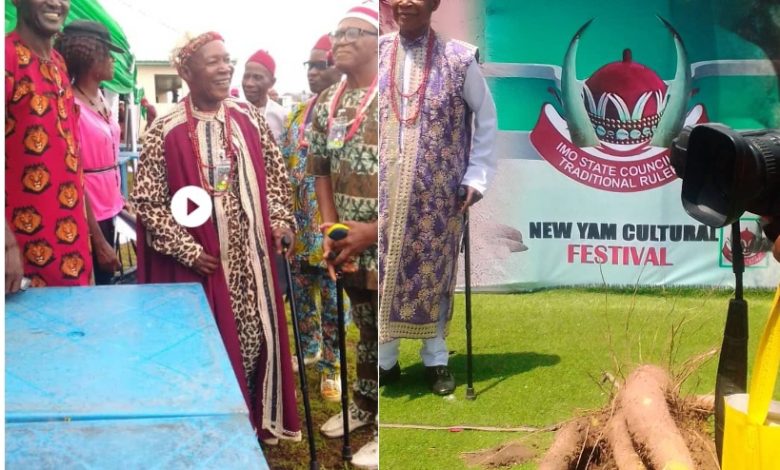
The Traditional Ruler of Umuakam Ancient Kingdom in Ideato South Local Government Area, Imo State, HRH, Eze P. E. Ewuzie (Eze Akamigbo III of Umuakam, Nchanchagu), has stated that the only thing that can reduce hunger to zero is active practical farming.
The custodian of culture made the above assertion in an interview with newsmen during the Eze Imo New Yam Ceremony, held at the Council of Traditional Rulers Palace at Mbari Street in Owerri, last week.
According to him, “I have 44 children and six wives who are schooling, well fed, some are abroad, some are in various universities. All these are possible because of farming;
“Today, my subjects are living in good and healthy condition because they are practical farmers. I have trained thousands of people with farming. I came first as the highest farmer who has enough land, I have three thousand palm friuts (Osisi Nkwu), breadfruit, one thousand (Ukwa), I have poultry farm. Am happy that God gave me the strength, wisdom to be where I am today”.
The Chairman of Ideato North and South Federal Constituency Traditional Rulers Council recalled that during the Rescue Mission administration of Imo Ex- Governor, Sen.Rochas Okorocha, he made him to stand as the Chairman of Traditional Rulers of Agriculture. I went round the 27 LGA to train them on farming”.
Eze Ewuzie who noted that he enjoys farming, thanked God that despite being about 76 years and 50 years in the throne, he is still working and very fit and promising.
The Royal Father who is fondly known as Nchanchagu, while speaking, appreciated the leadership of Eze Imo for organizing the 2023 Iri-Ji NdiImo, the festival he described as a welcome development aimed at elevating the Igbo culture globally heritage.
He commended Eze Okeke for all his efforts especially in the area of dividend of democracy, love and orderliness and prayed God to keep him and family safe, saying let the good work continue
Therefore, the Eze called on traditional rulers, religious leaders, youths and women to go back to the drawing boards and start farming in order to have sufficient food, food security, peace and progress”.