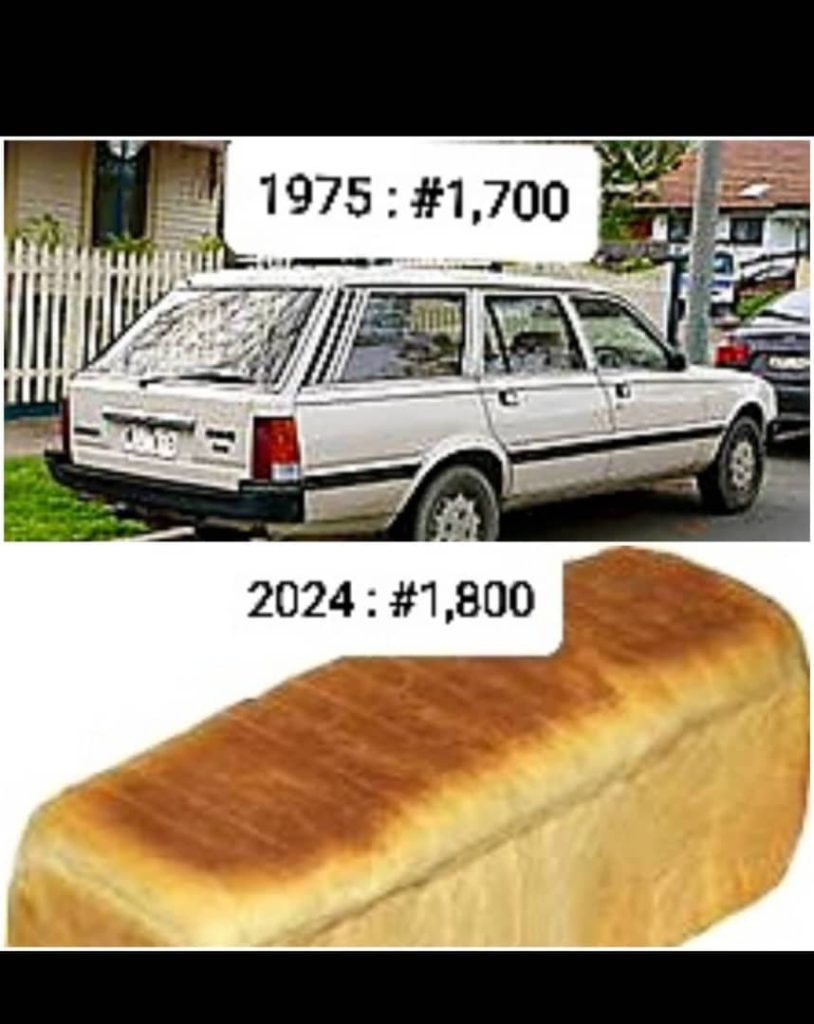
#1,700 Bought Car In 1975, In 2024, Loaf Of Bread Now Sold At #1,800 In Nigeria: Who Did These To Us?


By Dan Opara
In Nigeria here, we are in hell. The masses are suffering daily. Bad economic situation caused by wrong selection or rigged election exercise.
Individuals who are not supposed to be elected into various positions of authority are not in charge of the government.
Until we (Nigeria) repent and perhaps begin to elect credible persons into exotic offices, things will continue to be on the increasing side.
The progressive decline of Nigeria’s economy has sparked significant concern and reasonable Nigerians are raising eyebrows in condemnation.
Here in Nigeria, it could be recalled that in 1975, a pastry sum of ₦1,700 was sufficient to purchase a brand new car which symbolized prosperity and a good economy at that time.
However, by 2024, this same amount can barely cover the cost of a few loaves of bread, indicating a drastic devaluation of the currency and an economic downturn.
Numerous factors have contributed to this decline. Mismanagement of resources, corruption, and inadequate investment in critical sectors have all played substantial roles.
Nigeria’s heavy reliance on oil revenue has also left the economy vulnerable to global oil price fluctuations, exacerbating instability.
Moreover, ineffective economic policies and a lack of diversification have hindered sustainable growth.
Failure to fully exploit the potential of agriculture, manufacturing, and other non-oil sectors has limited job creation and economic resilience.
Additionally, rampant inflation and currency devaluation have eroded the purchasing power of Nigerians, making necessities increasingly unaffordable.
This has widened the gap between the wealthy minority and the majority, intensifying social inequality.
Addressing these challenges necessitates a comprehensive approach, including fiscal discipline, anti-corruption measures, and strategic investments in infrastructure and human capital.
Diversifying the economy and fostering entrepreneurship and innovation are also crucial for long-term prosperity.
Nigeria’s economic decline is a multifaceted issue with deep-rooted causes.
While no single entity bears sole responsibility, systemic weaknesses must be addressed through reforms aimed at reviving the economy and enhancing the well-being of all Nigerians.
Who did these to us?