Communiqué of the Stakeholders Summit on Substance Abuse Policy Successfully Held At NDLEA Complex In Imo


Location: Conference Hall, Imo State Command of the National Drug Law Enforcement Agency (NDLEA), Owerri, Imo State
Date:Thursday, 16th May, 2024
Theme: “Addressing efforts at masquerading the quest for legalization and decriminalization of illicit substances as ‘harm reduction’: the implications for society’s future, particularly the children”
Preamble
The Stakeholders Summit on Substance Abuse Policy was convened in response to the alarming rise in illicit substance abuse in Nigeria, as highlighted in the National Drug Report.
Concerns were raised about the alignment of some governmental agencies’ practices with existing national laws, particularly the National Drug Laws Enforcement Agency Act of 2000.
This concern was exacerbated by Nigeria’s abstention from voting against cannabis legalization at the 67th Session of the United Nations Convention on Narcotic Drugs, which cast doubt on the government’s commitment to combating the drug epidemic.
The summit highlighted the clandestine efforts by foreign entities to undermine Nigeria’s domestic drug policies, potentially reversing the country’s progress in tackling substance abuse.
The emphasis was placed on the societal harm caused by drug abuse, especially to children, and the importance of upholding the African Common Position on Drug Abuse established at the UN General Assembly Special Session on the World Drug Problems.
Introduction
The summit brought together civil service representatives, experts, and community stakeholders to strategize on safeguarding society’s future, particularly children, against external pressures advocating for the legalization and decriminalization of illicit substances.
Opening Remarks
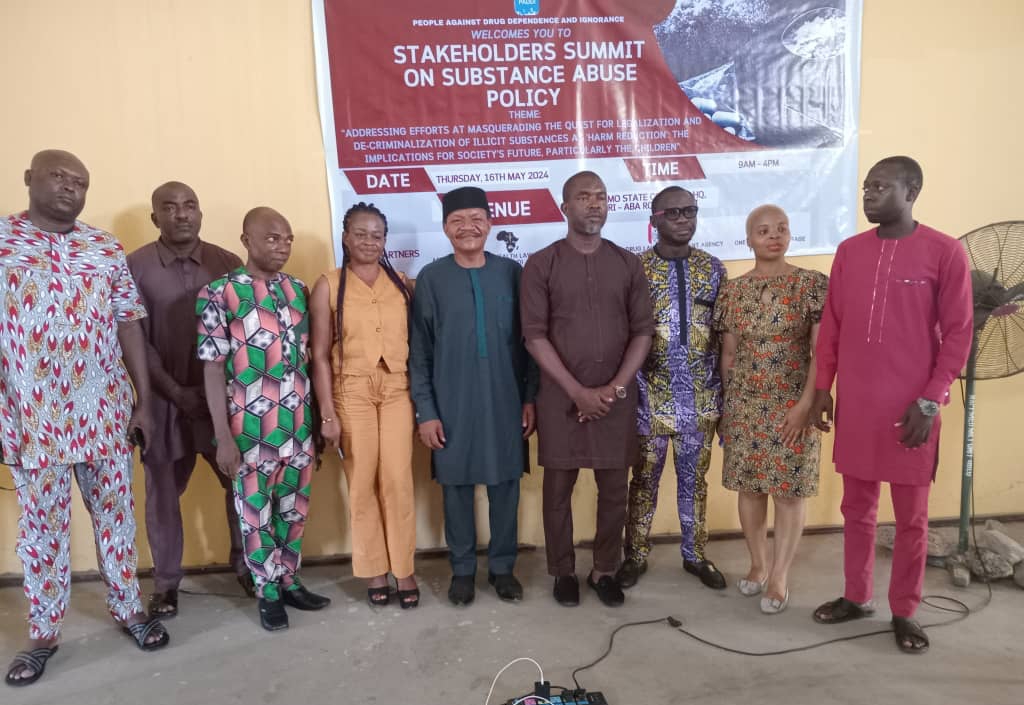
Ms. Ify Ngoka, Program Director of People Against Drug Dependence and Ignorance (PADDI), underscored the summit’s objective to raise awareness about the potential societal challenges posed by the legalization and decriminalization of drugs.
She stressed that existing Nigerian laws impose strict sanctions on drug-related activities and warned against succumbing to external pressures without proper legislative review.
Keynote Presentation
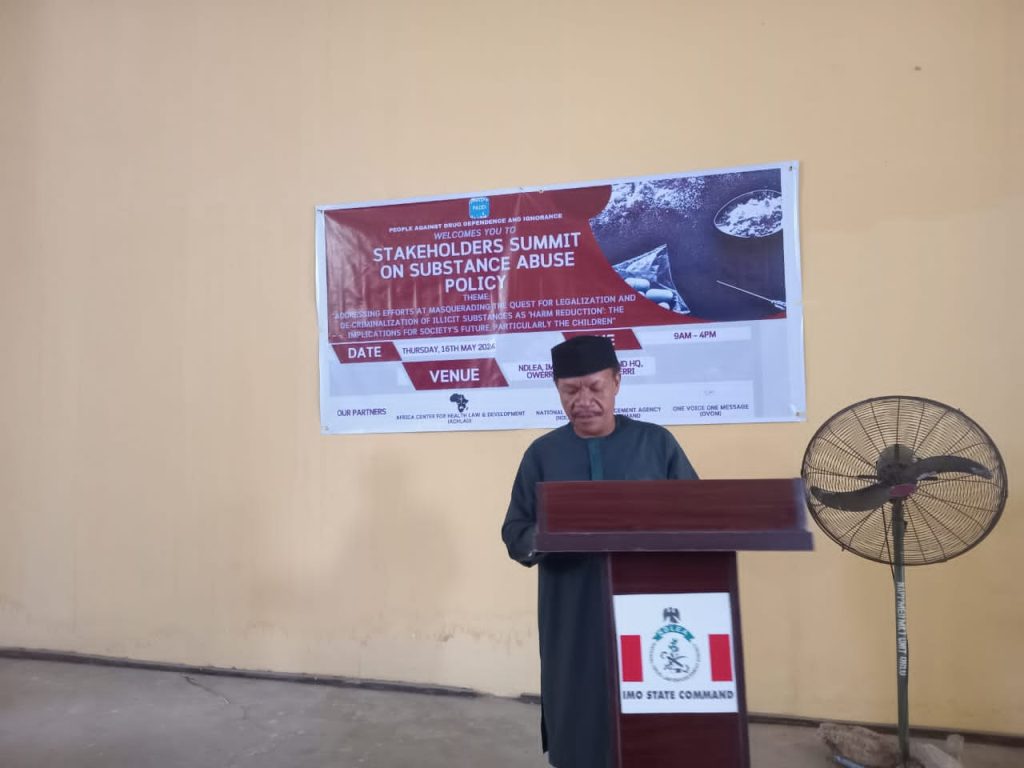
Barr. Eze Eluchie, President of the Africa Center for Health Law and Development (ACHLAD), detailed the severe societal consequences of drug legalization and decriminalization.
He argued that while proponents cite economic benefits and reduced criminality, these are overshadowed by increased crime rates and public health issues.
He cited the experiences of Colorado and Amsterdam, where legalization efforts are being reconsidered due to their adverse societal impacts.
Eluchie also expressed concern over a recent document, “Why People Use Drugs,” bearing the Nigerian Coat of Arms, which appeared to endorse drug use.
He emphasized that such publications undermine national laws and the efforts of the NDLEA.
Protecting Children and Society
Eluchie highlighted the need to prioritize the welfare of children, as enshrined in Article 33 of the Covenant on the Rights of the Child (CRC), which mandates the protection of children from substance abuse.
He criticized the misuse of ‘harm reduction’ strategies that prioritize individual drug users over societal well-being, noting that prevention should be the primary approach.
Medicinal Use of Illicit Drugs
Mr. Dennis Ekechukwu, a postgraduate research fellow, discussed the medicinal benefits of certain illicit drugs, emphasizing their responsible use under medical supervision.
Community Concerns
Participants raised several concerns, including the profit motives behind drug legalization, the negative impact on communities, and the prevalence of drug use among schoolchildren.
They called for increased prevention programs, public awareness campaigns, and stronger law enforcement.
Proposed Action Plan
The summit concluded with the following action points:
- Zero-Tolerance Policy:
Maintain a strict stance against illicit drugs and resist foreign influences advocating for legalization and decriminalization. - Economic Considerations:
Implement crop substitution policies for farmers involved in marijuana cultivation. - Research and Evidence-Based Advocacy:Conduct comprehensive research to counter pro-legalization arguments.
- Support for NDLEA:
Increase the budget and support for the NDLEA to effectively combat drug trafficking. - National Drug Abuse Prevention Agency (NDAPA):
Establish a dedicated agency for drug prevention, treatment, and counseling separate from the NDLEA. - Community Engagement:
Organize more sensitization programs, involve the media, and engage traditional and spiritual leaders to spread awareness and garner support.
The outcomes of this summit will be presented to relevant government bodies and the National Assembly committees overseeing substance abuse, youth, and social development, as part of the preparations for the International Day against Drug Abuse and Illicit Trafficking.
Signed:
Okey Oparaugo
Secretariat of the Stakeholders Summit
Owerri, Imo State, Nigeria
16th May, 2024