
FG Sues 36 Governors Over Local Government Autonomy…Supreme Court Hearing Set For May 30

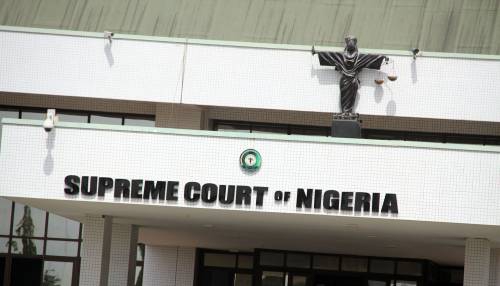
The Federal Government has initiated legal proceedings against the governors of Nigeria’s 36 states at the Supreme Court, alleging misconduct in the administration of Local Government Areas (LGAs). The suit, filed by the Attorney General of the Federation (AGF) and Minister of Justice, Lateef Fagbemi, seeks to secure full autonomy for all LGAs in the country.
The Federal Government’s suit specifically requests the Supreme Court to prohibit state governors from unilaterally dissolving democratically elected local government councils. It also seeks an order mandating that funds allocated to LGAs be directly disbursed to them from the federation account, in accordance with constitutional provisions, rather than through the controversial joint accounts controlled by state governors.
Additionally, the suit aims to prevent governors from appointing caretaker committees to manage LGAs, advocating instead for constitutionally mandated democratic elections. The Federal Government has also requested an injunction to stop governors and their agents from tampering with LGA funds from the federation account when no democratically elected local government system is in place.
In its 27 supporting grounds for the suit, the Federal Government argues that Nigeria’s federal system, as established by the 1999 Constitution, recognizes the federal, state, and local governments as three distinct tiers. Each tier draws operational funds from the federation account, and the constitution explicitly requires a democratically elected system at the local government level.
The Federal Government contends that many state governors have deliberately failed to establish democratically elected local government councils, thereby subverting the constitution. Efforts to compel compliance with constitutional mandates have reportedly been unsuccessful, and continuing to allocate funds to states without democratically elected LGAs undermines the constitution’s integrity.
The Supreme Court has scheduled the hearing for this significant case on May 30.




