Things You Need to Know More About The Local Government System In Nigeria…Structures, Functions, Challenges


With the local government system now operational in Imo State following recent elections, the issuance of certificates of return, and the inauguration of officials, it is crucial to understand local government council administration.
Local governments play a vital role in service delivery, development planning, and community representation.
They consist of an executive led by a Chairman and a Legislative Council of elected representatives ( Councilors).
Familiarizing ourselves with their structure, functions, and accountability mechanisms can empower citizens (the interesting people of Owerri West LGA) to engage actively in governance and advocate for their communities’ needs, ensuring that local challenges are addressed effectively.
The concept of localized governance is a time-honored practice that resonates in all over the globe.
In Nigeria, governance has traditionally existed at the community level, predating the establishment of a modern state system.
Despite these historical developments, local government retains significant relevance in Nigeria’s political landscape.
The contemporary focus on local governance arises from the pressing need to enhance accessibility and responsiveness in public administration.
While local governments occasionally overlap with other tiers of government, they play a vital role in promoting efficiency and effectiveness within a democratic framework.
Structures and Functions of Local Government in Nigeria
According to the 1999 Constitution, Nigeria operates a single-tier system of local government, which clearly delineates the separation of powers among its various branches.
The Executive Arm of Local Government
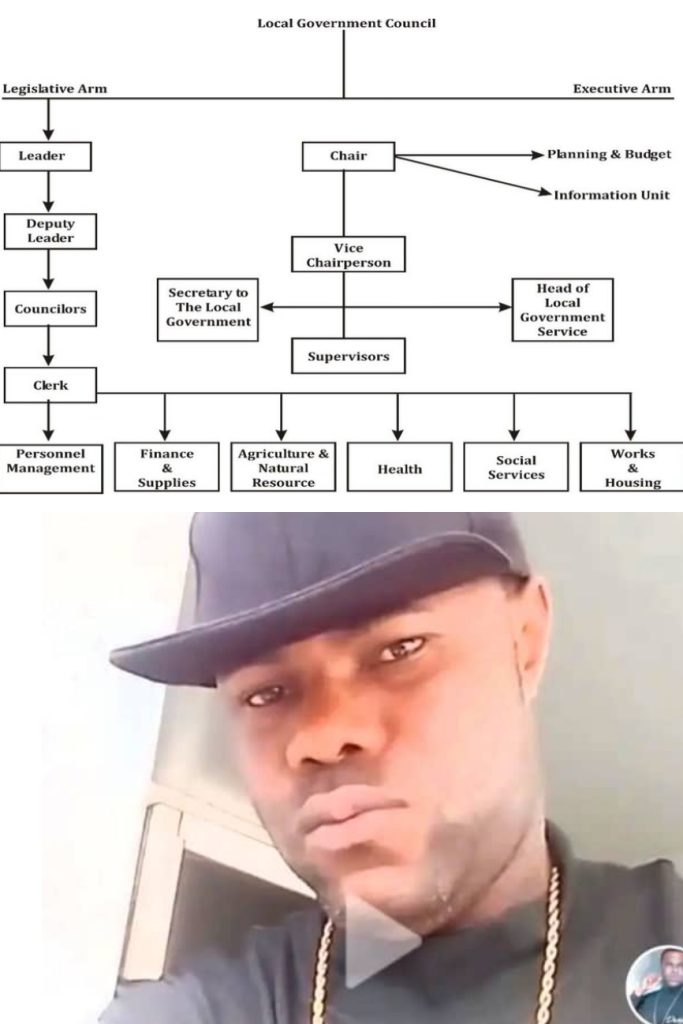
The Executive Arm is composed of the Chairman, Vice Chairman, Supervisors, and Secretary.
The Chairman acts as the Chief Executive (Accounting Officer) bearing multiple critical responsibilities, including:
Ensuring compliance with financial regulations and maintaining accountability throughout their tenure.
Submitting monthly income and expenditure statements, along with annual reports, to the local government council.
Directing local government affairs and delegating responsibilities to the Vice Chairman, Supervisors, and Secretary.
Conducting weekly Executive Committee meetings and liaising with the legislative arm of the local government.
The Executive Committee, led by the Chairman, comprises the Vice Chairman, Supervisors, and Secretary. This committee convenes weekly to discuss departmental memoranda and may summon heads of departments as necessary.
Roles of Key Executive Members
Vice Chairman: The Vice Chairman manages specific departments and acts in the Chairman’s absence, ensuring continuity in governance.
Secretary to the Local Government: The Secretary, appointed by the Chairman, serves as the Executive Committee’s secretary, coordinating departmental activities and liaising with both the local government council and relevant state officials.
Supervisors: Supervisors are political appointees responsible for overseeing individual departments, serving as political heads, and playing integral roles in project execution within their respective domains.
The Legislative Arm of Local Government
The Legislative Arm consists of the Leader, Deputy Leader, and elected Councilors. Their key functions include:
Debating, approving, or amending the annual budget, subject to the Chairman’s veto.
Monitoring project implementation and reviewing monthly financial statements.
Advising and consulting with the Chairman on governance matters.
Bylaws enacted by the local government require the Chairman’s assent to become enforceable.
Functions of Local Government in Nigeria
The 1999 Constitution outlines several responsibilities assigned to local governments, which include:
Collection of rates and licensing fees.
Maintenance of public facilities such as cemeteries, markets, and roads.
Management of public health services and primary education.
Regulation of local businesses and services.
These functions aim to enhance local infrastructure and promote community welfare.
Challenges Facing Local Governments
Despite their crucial role, local governments often fall short of expectations due to several pervasive challenges:
- Corruption: Widespread corrupt practices among local government officials undermine efficiency, with rampant issues such as contract inflation and embezzlement but now, the people are watching.
- Perception of Mismanagement: Citizens frequently view local governments as entities that primarily distribute funds rather than deliver essential services.
- State Government Interference: Many state governments divert local government funds through joint accounts, hindering financial autonomy and operational effectiveness.
- Overstaffing and Redundancy: Numerous local bureaucracies suffer inefficiencies due to excess personnel and a lack of clear responsibilities.
- Population Pressure: Overpopulation in certain local governments hampers service delivery, while constitutional barriers restrict the creation of new local governments.
- Caretaker Committees: The appointment of caretaker committees instead of elected officials often leads to manipulation by state governments, diminishing accountability.
- Tax Compliance Issues: A significant portion of the populace fails to pay local taxes, further straining the financial resources necessary for effective governance.
Recommendations for Improvement
To enable local governments to fulfill their developmental roles effectively, several measures should be considered:
- Ethical Education: It is imperative to instill a new ethical perspective among citizens regarding the role of local governments, emphasizing their functions beyond mere financial distribution.
- Empowerment Programs: Local governments should implement initiatives that empower communities rather than simply providing financial assistance.
- Promoting Accountability: State governments must demonstrate transparency and accountability, serving as models for local leaders to reduce corruption.
In conclusion, while local governments in Nigeria have evolved significantly, their effectiveness remains limited.
The quest for good governance at the local level necessitates an attitudinal shift among both local politicians and citizens, rather than mere structural reforms.
This transformation is essential for fostering a responsive and accountable local governance framework that meets the needs of the populace.
Written by Dan Opara (Danjay), Journalist from ThePressman Newspaper, Owerri,
Imo State.
+234(0)7030811559.