By Dan Opara
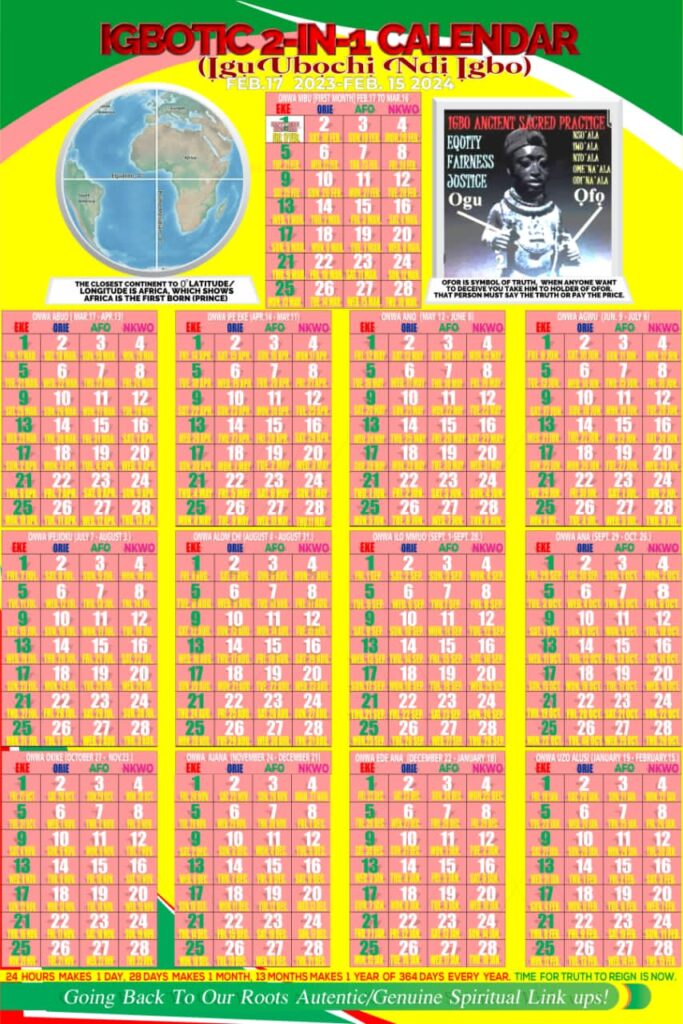
The Igbo calendar, known as Ọ̀gụ́àfọ̀ Ị̀gbò, is a traditional system used by the Igbo people of Nigeria.
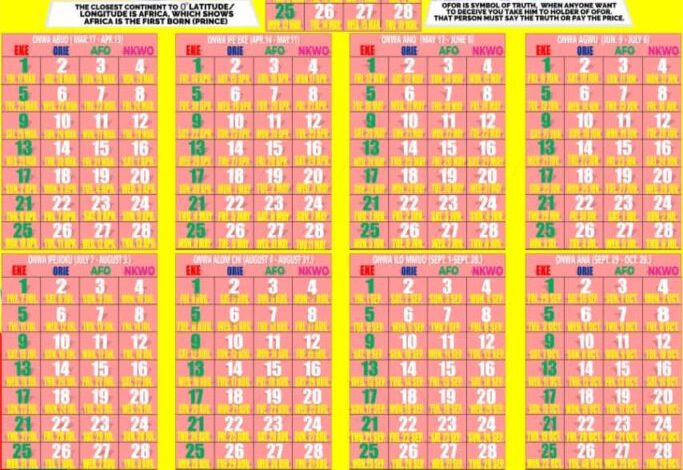
It consists of 13 months, each containing 7 weeks, with 4 market days in each week: Eke, Orie, Afọ, and Nkwọ.
An extra day is added at the end of the year.
Structure of the Calendar
Months (Ọnwa): 13 months, each with 28 days, plus an intercalary day.
Weeks (Izu): 4 days (Eke, Orie, Afọ, Nkwọ).
Market Days: Each day corresponds to specific market activities in various communities.
Months and Corresponding Gregorian Equivalents
- Ọnwa Mbụ (February–March)
- Ọnwa Abụọ (March–April)
- Ọnwa Ife Eke (April–May)
- Ọnwa Anọ (May–June)
- Ọnwa Agwụ (June–July)
- Ọnwa Ifejiọkụ (July–August)
- Ọnwa Alọm Chi (August to early September)
- Ọnwa Ilọ Mmụọ (Late September)
- Ọnwa Ana (October)
- Ọnwa Okike (Early November)
- Ọnwa Ajana (Late November)
- Ọnwa Ede Ajana (Late November to December)
- Ọnwa Ụzọ Alụsị (January to early February).
Significance
The calendar is intertwined with both spiritual and commercial activities, reflecting the societal structure and cultural practices of the Igbo people.
It also serves to coordinate inter-village market days, although variations exist among different communities.
The traditional timekeepers are often Chief Priests or Dibia, who maintain the calendar’s significance in daily life.