

By Dan Opara
Female Genital Mutilation (FGM) is bad for women.
It is a harmful practice that violates human rights, causes severe physical and psychological trauma, and has no health benefits.
Reasons Why FGM Is Bad for Women:
Health Complications: FGM can lead to excessive bleeding, infections, complications during childbirth, and even death.
Loss of Sexual and Reproductive Rights: It reduces sexual pleasure and can cause lifelong pain during intercourse.
Psychological Trauma: Many victims suffer from depression, anxiety, and post-traumatic stress disorder (PTSD).
Violation of Human Rights: The practice is a form of gender-based violence and discrimination.
No Medical or Religious Justification: FGM is not required by any religion and has no medical benefits.
Global Stance on FGM:
The United Nations (UN) and the World Health Organization (WHO) strongly condemn FGM.
Many countries, including Nigeria, have laws against FGM.
Awareness campaigns continue to educate communities on the dangers of FGM and the importance of eradicating it.
FGM is a harmful cultural practice that should be eliminated. Women and girls deserve bodily autonomy, health, and dignity.
Nonetheless, Female Genital Mutilation (FGM) remains a critical human rights issue as global organizations, governments, and activists intensify efforts to end the practice.
FGM, a harmful procedure involving the partial or total removal of external female genitalia for non-medical reasons, is widely recognized as a form of gender-based violence with severe health and psychological consequences.
Types and Prevalence of FGM
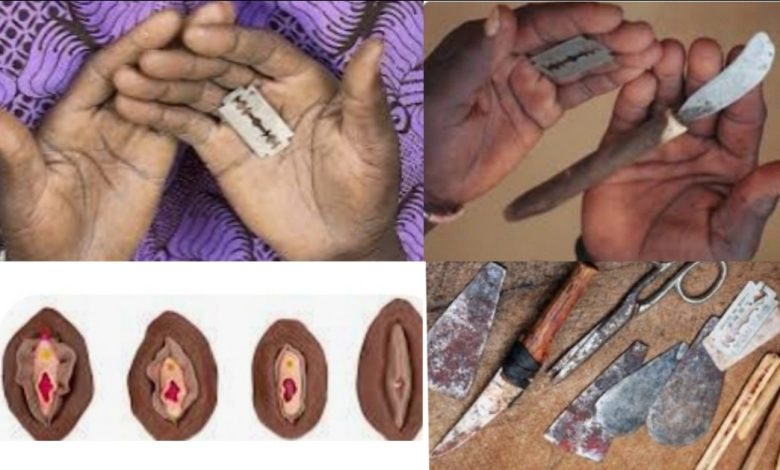
The World Health Organization (WHO) classifies FGM into four main types:
Type 1 (Clitoridectomy): Partial or total removal of the clitoris.
Type 2 (Excision): Removal of the clitoris and inner labia, with or without the removal of the outer labia.
Type 3 (Infibulation): Narrowing of the vaginal opening by cutting and repositioning the labia, often with stitching.
Type 4 (Other harmful procedures): Includes pricking, piercing, scraping, or burning of female genitalia.
Despite widespread campaigns, the practice continues in many parts of Africa, the Middle East, and Asia, often justified by cultural, social, or religious beliefs.
Why FGM Persists
FGM is rooted in long-standing traditions and misconceptions. Common reasons include:
Cultural Tradition: Many communities uphold FGM as a rite of passage into womanhood.
Control of Female Sexuality: Some believe the practice helps maintain virginity before marriage and prevents promiscuity.
Social Acceptance: In many societies, FGM is considered a requirement for marriage, increasing pressure on families to subject their daughters to the practice.
Health and Hygiene Myths: Some falsely believe FGM enhances cleanliness or improves fertility, despite having no medical benefits.
Severe Health and Psychological Consequences
Medical experts warn that FGM has devastating health impacts, including:
Severe pain and excessive bleeding, leading to complications or death
Infections, including HIV transmission due to unsterilized tools
Increased risk during childbirth, contributing to maternal and infant mortality
Chronic pain, menstrual disorders, and urinary tract infections
Long-term psychological trauma, including depression and post-traumatic stress disorder (PTSD)
Legal Bans and Global Campaigns
Countries around the world are stepping up their legal and advocacy efforts to eliminate FGM. In Nigeria, the Violence Against Persons Prohibition (VAPP) Act criminalizes the practice, with strict penalties for offenders. Similarly, organizations like the United Nations (UN), WHO, and UNICEF continue to drive awareness campaigns, urging communities to abandon FGM.
The Way Forward: Collective Action Against FGM
To fully eradicate FGM, experts and activists emphasize:
Public Awareness and Education: Educating communities about the dangers and myths surrounding FGM.
Empowerment of Girls and Women: Encouraging education and economic independence to resist harmful traditions.
Stronger Law Enforcement: Ensuring strict penalties for practitioners and supporters of FGM.
Community Engagement: Working with traditional and religious leaders to advocate for cultural change.
Support for Survivors: Providing access to medical care, counseling, and legal aid for victims.
As the world marks another year in the fight against FGM, stakeholders stress that the battle is far from over. Ending this harmful practice requires sustained efforts from governments, non-governmental organizations, media, and individuals committed to protecting the rights and dignity of women and girls globally.
Clitoridectomy is the surgical removal of the clitoris. It is commonly associated with Female Genital Mutilation (FGM), a harmful traditional practice in some cultures, particularly in parts of Africa, the Middle East, and Asia. The procedure is often performed for cultural, religious, or social reasons but has no medical benefits and can lead to severe physical and psychological consequences, including pain, infection, sexual dysfunction, and complications during childbirth.
In contrast, clitoridectomy may be performed for medical reasons in rare cases, such as treating clitoral cancer or other serious medical conditions affecting the clitoris.
Many countries and international organizations, including the United Nations (UN) and World Health Organization (WHO), strongly condemn non-medical clitoridectomy and advocate for the abolition of FGM due to its violation of human rights.
Excision is the surgical removal of tissue, commonly used in medical procedures to remove tumors, cysts, or diseased organs. In the context of Female Genital Mutilation (FGM), excision refers to the partial or total removal of the clitoris and labia minora, causing severe health risks and violating human rights.
Infibulation is the most severe form of Female Genital Mutilation (FGM), involving the removal of the clitoris, labia minora, and labia majora, followed by stitching to narrow the vaginal opening. This practice causes extreme pain, infections, childbirth complications, and lifelong trauma. It is widely condemned as a human rights violation.
Other harmful Female Genital Mutilation (FGM) procedures include pricking, piercing, incising, scraping, and cauterization of female genital tissue.
These practices, often performed without medical supervision, cause severe pain, infections, infertility, childbirth complications, and psychological trauma.
FGM is internationally condemned as a violation of human rights and a form of gender-based violence.




