

By Dan Opara
From my own view and global understanding, a white man can never be crowned Eze Mmuo (King of the Spirits), just as a black man can never be allowed to become a Pope.
These revered positions are deeply rooted in distinct traditions, histories, and spiritual lineages, reflecting the unique cultural identities and sacred leadership structures of different civilizations.
Tradition and heritage play significant roles in leadership selection within various cultural and religious institutions.
In Igbo cosmology, the revered title of Eze Mmuo (King of the Spirits) is deeply rooted in ancestral lineage, indigenous spiritual authority, and the traditions of the land.
It is a position that embodies the essence of Igbo spirituality, making it unattainable for a foreigner.
Similarly, within the Catholic Church, the Papacy is historically and traditionally a position occupied by individuals of European descent, shaped by centuries of ecclesiastical governance.
Just as heritage defines Eze Mmuo, historical precedent shapes the Papacy.
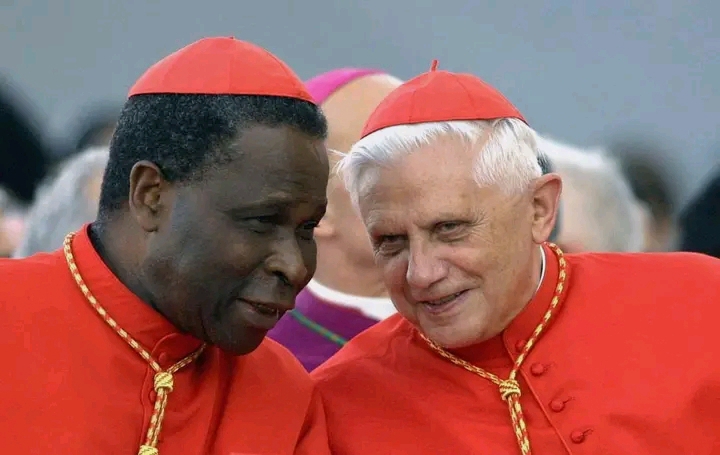
Meanwhile, Cardinal Bernardin Gantin (1922–2008) was a Beninese prelate of the Catholic Church and the first African to head a major Vatican dicastery.
He served as the Prefect of the Congregation for Bishops (1984–1998) and as Dean of the College of Cardinals (1993–2002).
Gantin was highly respected for his wisdom and dedication to the global Church, and his influence helped shape episcopal appointments worldwide.
Cardinal Joseph Ratzinger (1927–2022) was a German prelate who later became Pope Benedict XVI (2005–2013).
Before his papacy, he served as Prefect of the Congregation for the Doctrine of the Faith (1981–2005), playing a crucial role in defending and clarifying Catholic doctrine.
As pope, he emphasized theological depth, liturgical tradition, and dialogue with other faiths.
He resigned in 2013, becoming the first pope to do so in nearly 600 years, and lived as Pope Emeritus until his death.
Both cardinals were influential figures in the Vatican, shaping the modern Catholic Church through their leadership and doctrinal work.




