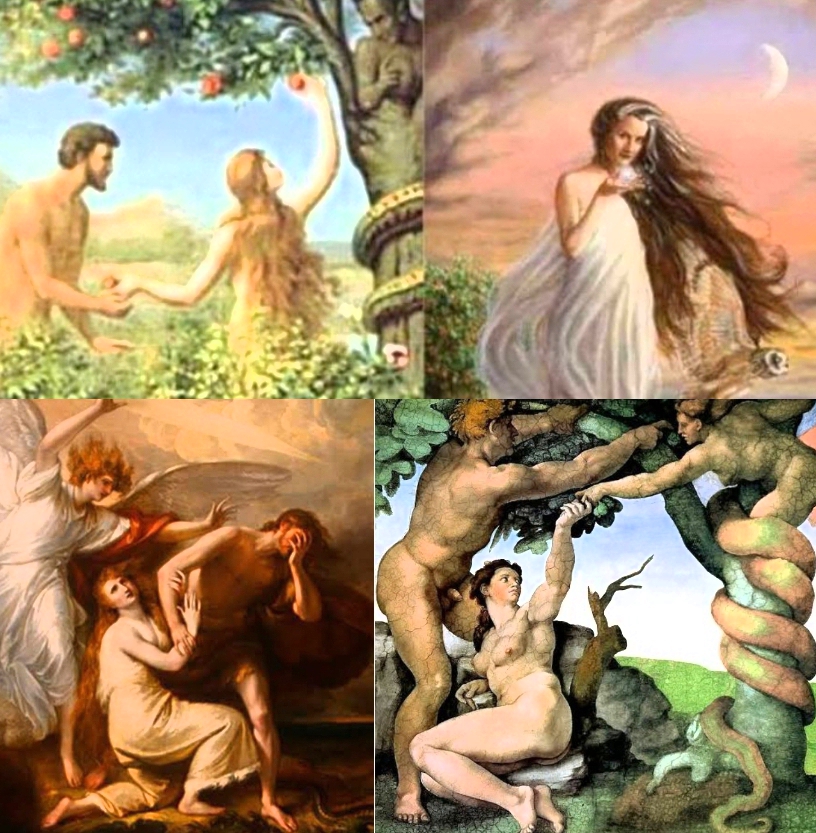
In Jewish folklore—particularly in Kabbalistic and Midrashic traditions—there exists a compelling figure known as Lilith, who is sometimes described as the first wife of Adam, predating Eve.
This narrative, while absent from the canonical Hebrew Bible, emerges from extra-biblical sources such as the Alphabet of Ben Sira, a medieval Jewish text dating from the 8th to 10th century CE.
According to this tradition, Lilith was created by God from the same earth and at the same time as Adam, making her his equal in every way. However, Lilith refused to submit to Adam’s authority, asserting her independence.
Her refusal led her to leave the Garden of Eden, after which God created Eve from Adam’s rib—a symbol of partnership rather than equality.
Some variations of the legend suggest that Lilith and Adam had sexual relations before her departure, though such accounts are considered folklore, not doctrinal teachings in mainstream Jewish, Christian, or Islamic theology.
Elements of Jewish Folklore
Jewish folklore is a vast and intricate tradition encompassing religious beliefs, mystical teachings, cultural narratives, and supernatural themes.
It reflects the historical and spiritual experiences of Jewish communities across centuries. Key elements include:
- Folktales and Legendary Creatures
The Golem: A mystical creature formed from clay and brought to life through sacred rituals.
The Golem, especially associated with Rabbi Judah Loew of Prague, was said to protect the Jewish people, though it could also become uncontrollable.
The Dybbuk: A malevolent or unsettled spirit that possesses living individuals, often featured in ghost stories and theatrical dramas.
Elijah the Prophet: A revered figure believed to appear in disguise, testing people’s kindness and aiding those in distress.
- Kabbalistic and Mystical Lore
Jewish mysticism, particularly Kabbalah, has deeply influenced folklore with tales of divine names, angels, demons, and the architecture of the spiritual universe.
Lilith, within this framework, is portrayed as a night demon, associated with seduction and the endangerment of infants and childbirth.
- Wise Men and Rabbinic Tales
Stories often feature wise rabbis who resolve complex moral dilemmas or outwit antagonists, particularly in Eastern European (Ashkenazi) traditions. - Folklore in Jewish Holidays
Hanukkah: Celebrated with stories of the Maccabees and the miracle of the oil.
Purim: Known for humorous and theatrical reinterpretations (Purimspiels) of the tale of Queen Esther.
- Superstitions and Customs
Jewish tradition includes protective practices such as avoiding the evil eye, wearing amulets like the Hamsa, and invoking blessings like kein ayin hara (no evil eye).
Lilith’s Mythical Journey After Eden
According to esoteric Jewish texts, once Lilith left Adam, she fled to the Red Sea—a place symbolizing chaos and demonic presence in ancient mysticism.
There, she is believed to have consorted with demons and birthed numerous demonic offspring.
God dispatched three angels—Senoy, Sansenoy, and Semangelof (also spelled Sanvi, Sansanvi, and Semangelaf)—to persuade her to return.
Lilith, however, refused, and as a result, she was cursed. In an act of compromise, she vowed not to harm any infant who bore an amulet inscribed with the names of these three angels.
These protective amulets became a widespread tradition in ancient Jewish communities, especially for safeguarding newborns and mothers.
The Protective Amulet in Jewish Tradition
An amulet is not a person but a sacred object believed to possess spiritual or magical protection against evil, illness, or misfortune.
Typically worn or carried, amulets are inscribed with divine names, symbols, or prayers.
In Jewish practice, amulets often include the names Senoy, Sansenoy, and Semangelof to ward off Lilith and other malevolent forces. Similar traditions exist in other religions:
In Christianity, crosses and medals like the Saint Benedict Medal serve protective purposes.
In Islam, amulets (ta’wiz) are often inscribed with verses from the Qur’an.
In African, Asian, and Indigenous cultures, amulets may be made from beads, bones, herbs, or carved items imbued with spiritual meaning.
Lilith vs. Eve: A Comparative View
The most prominent distinction between Lilith and Eve lies in their origins, character, and theological roles:
- Origins and Textual Sources
Eve is introduced in the Book of Genesis as the first woman, created from Adam’s rib.
Lilith originates from Jewish folklore and apocryphal sources, such as the Alphabet of Ben Sira. She was created from the same earth as Adam, signifying equality.
- Relationship with Adam
Eve is depicted as a submissive helper, formed after Adam.
Lilith, on the other hand, demanded equality, refused submission, and chose self-exile over compliance.
- Symbolic Representation
Eve is often viewed as the “mother of all living,” sometimes blamed for humanity’s fall.
Lilith symbolizes independence, rebellion, and in some interpretations, female empowerment.
In medieval and mystical texts, she is portrayed as a dangerous demoness.
- Religious Significance
Eve holds a central place in Judeo-Christian and Islamic theology.
Lilith, though absent from the Bible, remains a powerful figure in Jewish mysticism, folklore, and feminist reinterpretations.
In summary, Lilith is a multifaceted figure whose story traverses myth, mysticism, and cultural imagination.
Though not recognized in the canonical Bible, she persists as a symbol of defiance, mystery, and power in Jewish folklore and beyond.
Researched By Dan Opara (Danjay), Journalist, from ThePressman Newspaper,
www.thepressman.com.ng
+2347030811559.