

The papacy, the oldest continuing institution in the world, traces its origins to St. Peter, whom Catholics regard as the first Pope.
Since then, there have been 267 Popes, each serving as the Bishop of Rome and spiritual leader of the global Catholic Church.
Early Popes (1st–3rd Centuries)
These early successors of St. Peter laid the foundational teachings and structure of the Church during times of persecution and martyrdom.
St. Peter (32–64)
St. Linus (64–76)
St. Anacletus (Cletus) (76–88)
St. Clement I (88–97)
St. Evaristus (97–105)
St. Alexander I (105–115)
St. Sixtus I (115–125)
St. Telesphorus (125–136)
St. Hyginus (136–140)
St. Pius I (140–155)
St. Anicetus (155–166)
St. Soter (166–175)
St. Eleutherius (175–189)
St. Victor I (189–199)
St. Zephyrinus (199–217)
St. Callixtus I (217–222)
St. Urban I (222–230)
St. Pontian (230–235)
St. Anterus (235–236)
St. Fabian (236–250)
…and many others followed, guiding the Church through turbulent centuries.
Imperial and Medieval Popes (4th–15th Centuries)
This era witnessed the establishment of Christianity as the state religion and the Church’s significant role in shaping Western civilization. Notable Popes from this period include:
St. Leo I (the Great) (440–461) – Known for his theological insights and for meeting Attila the Hun.
St. Gregory I (the Great) (590–604) – A reformer and patron of missions.
Leo III (795–816) – Crowned Charlemagne as Holy Roman Emperor.
Urban II (1088–1099) – Initiated the First Crusade.
Innocent III (1198–1216) – Strengthened papal authority in Europe.
Boniface VIII (1294–1303) – Promoted papal supremacy but clashed with secular rulers.
Renaissance and Early Modern Popes (15th–18th Centuries)
This period was marked by both artistic patronage and political intrigue. Prominent figures include:
Alexander VI (1492–1503) – Known for his controversial papacy and the Borgia legacy.
Julius II (1503–1513) – Commissioned Michelangelo to paint the Sistine Chapel ceiling.
Leo X (1513–1521) – Pope during the early Reformation.
Pius V (1566–1572) – Excommunicated Elizabeth I of England.
Clement VIII (1592–1605) – Oversaw key reforms during the Counter-Reformation.
Modern Popes (19th Century–Present)
These Popes faced the challenges of modernity, global wars, and secularization, while leading spiritual renewal.
Pius IX (1846–1878) – Longest-reigning Pope (31 years); declared the dogma of the Immaculate Conception.
Leo XIII (1878–1903) – Promoted social justice through Rerum Novarum.
Pius X (1903–1914) – Canonized saint and liturgical reformer.
Benedict XV (1914–1922) – Advocated peace during World War I.
Pius XI (1922–1939) – Opposed totalitarian regimes.
Pius XII (1939–1958) – Led the Church during World War II.
John XXIII (1958–1963) – Convened the Second Vatican Council.
Paul VI (1963–1978) – Oversaw the Council’s completion and implementation.
John Paul I (1978) – Served only 33 days.
John Paul II (1978–2005) – First non-Italian Pope in 455 years; influential in global affairs.
Benedict XVI (2005–2013) – Theologian and first pope to resign in nearly 600 years.
Francis (2013–2025) – First Latin American Pope; known for humility and emphasis on mercy.
The Election of Pope Leo XIV – A New Chapter in Papal History
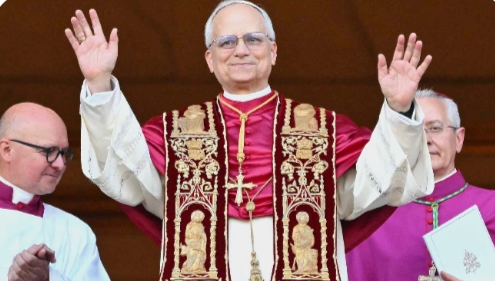
On May 8, 2025, Cardinal Robert Francis Prevost was elected as the 267th Pope of the Roman Catholic Church, assuming the name Pope Leo XIV.
His election marks a historic milestone as he becomes the first American-born pontiff in history.
The papal conclave, convened after the death of Pope Francis on April 21, 2025, concluded on its second day.
White smoke billowing from the Sistine Chapel chimney signaled to the world that a new shepherd had been chosen.
Cardinal Dominique Mamberti, the protodeacon, stepped out onto the balcony of St. Peter’s Basilica and declared the traditional “Habemus Papam”—“We have a Pope”—to the throngs gathered in St. Peter’s Square.
In his first public appearance, Pope Leo XIV greeted the world with the words, “Peace be with you,” emphasizing unity, healing, and a renewed hope for the Church’s mission in a modern world.
His election ushers in a new era of leadership, spirituality, and reform for over 1.3 billion Catholics worldwide.




