Culled By Dan Opara
In the late 1970s and early 1980s, Ghana suffered a crippling political and economic crisis that left the country on the brink of collapse.
Characterized by rampant inflation, currency depreciation, ballooning public debt, massive youth unemployment, and civil unrest, Ghana was thrown into a spiral of despair.
As a result, millions of Ghanaians fled their homeland in search of greener pastures across Europe, Asia, and Africa.
Among the most welcoming destinations was Nigeria. With a pan-African spirit and a “big brother” disposition, Nigeria opened its doors to more than 1.5 million documented Ghanaian migrants and nearly another million undocumented individuals.
Their honesty, work ethic, and simple lifestyle earned them jobs across all sectors—education, healthcare, hospitality, transportation, construction, and domestic services.
Within a decade, Ghanaians became deeply integrated into Nigerian society.
They filled roles at every level—from unskilled to highly skilled labor.
Many married Nigerians and built families, effectively becoming part of the socio-economic fabric of the nation.
However, the sheer number of immigrants soon stirred concerns among Nigerian citizens, especially the youth and their parents, who feared rising job insecurity and marginalization in their own country.
By 1983, under immense internal pressure, the Nigerian government decided to expel over two million African migrants—of which approximately 1.5 million were Ghanaians.
The eviction was abrupt, harsh, and uncoordinated.
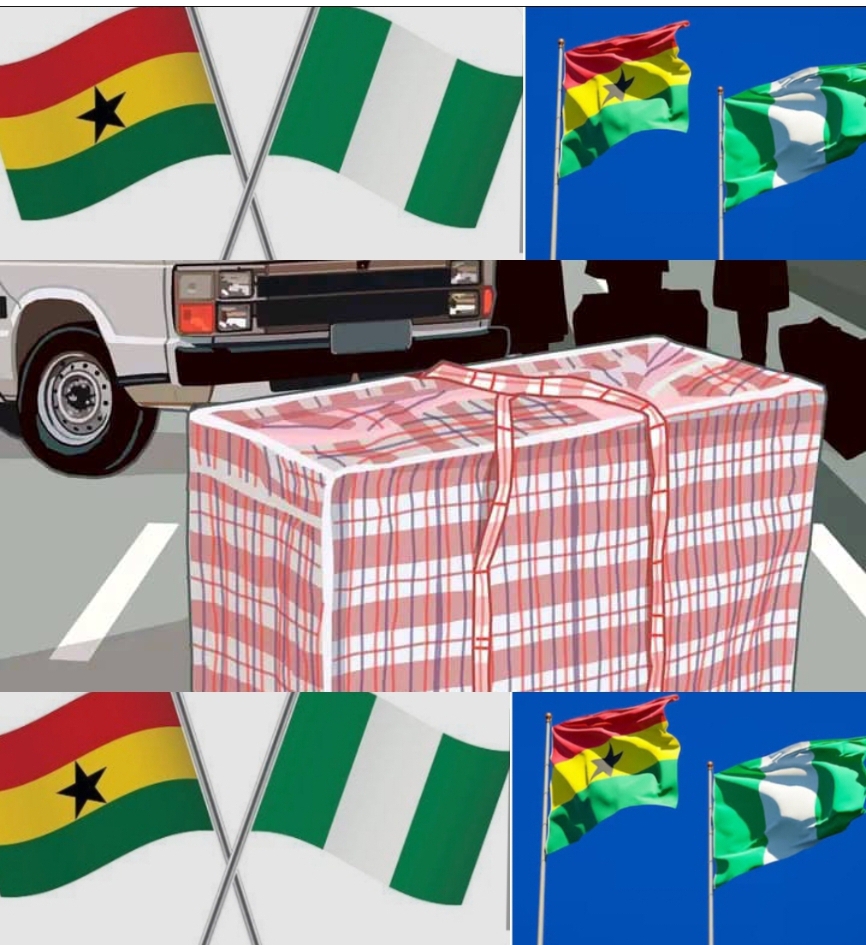
Those affected had little time to prepare, and many resorted to packing their belongings in large, checkered plastic bags—bags that would later gain the infamous nickname: “Ghana Must Go.”
The expulsion left scars—anger, humiliation, and a deep sense of betrayal.
Ironically, four decades later, the tide has turned.
Nigeria, now battling its own socio-economic turmoil—corruption, poor governance, currency devaluation, mass unemployment, inflation, and insecurity—has found itself in a similar situation as Ghana did in the 1970s.
Since 1999, millions of Nigerians have emigrated in pursuit of better opportunities, with a significant number settling in Ghana.
Just as Ghanaians once did in Nigeria, Nigerian migrants in Ghana have become deeply involved in commerce, entertainment, and various informal sectors.
Their resilience and entrepreneurial spirit have made them visible and influential. However, this has stirred growing resentment among Ghanaian youth who now feel economically displaced in their own homeland.
Last week, history appeared to repeat itself.
In a massive public demonstration, thousands of Ghanaian youths called on their government to expel Nigerian immigrants, accusing them of worsening unemployment and economic hardship in Ghana.
Forty-two years after the “Ghana Must Go” saga, the “Nigeria Must Go” movement is gaining traction.
This looming expulsion evokes painful questions: Where was the Organization of African Unity (OAU) in 1983 when Ghanaians were mistreated and humiliated?
And where is the African Union (AU) today, as Nigerians face the threat of mass deportation?
What we are witnessing is a disturbing failure of African diplomacy, unity, and shared humanity.
In 1983, Nigeria acted without foresight, driven by nationalistic fervor rather than continental solidarity.
Today, Ghana seems poised to follow the same path, blinded by similar emotions and pressures.
The cherished milk of human kindness that once defined African brotherhood appears to have soured.
Once white and pure, it now turns dark, opaque, and bitter—symbolizing a continent increasingly divided by economic fears, political desperation, and a short memory of its own history.
Indeed, this is not just a Ghana-Nigeria crisis; it is a pan-African tragedy.
One that calls for urgent introspection, leadership, and unity—lest we continue the vicious cycle of expulsion, trauma, and betrayal.