
Adaora Onyechere Sydney-Jack: Championing the Reserved Seats for Women Bill for a More Equitable Nigeria

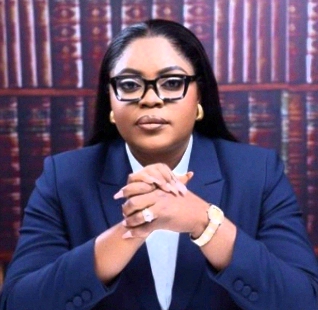
In a nation where women’s voices are too often muted, Adaora Onyechere Sydney-Jack stands as a beacon of hope and change.
As the host of Gender Agenda on Africa Independent Television (AIT), she has dedicated her career to amplifying women’s voices and advocating for inclusive governance.
Through her tireless leadership, she is driving the campaign for the Reserved Seats for Women Bill, an initiative she believes will create a fairer and more representative Nigeria.
Sydney-Jack views the Bill not merely as legislation but as a profound statement that women’s voices must be assured, respected, and valued.
She believes the measure will transform Nigerian politics, especially for women in marginalised or underrepresented communities.
In this exclusive conversation with Mary Nnah, she shares her inspiration, the obstacles facing Nigerian women in politics, and her vision for an inclusive democracy.
“My inspiration stems from years of gender advocacy and witnessing the exclusion of women from political spaces despite their competence and contributions,” she explains.
Throughout her broadcasting career, Sydney-Jack has championed inclusive governance and highlighted the structural barriers preventing women from accessing power.
Her 2019 bid for a seat in the Imo State House of Assembly, followed by her tenure as Special Adviser on Information and Advocacy, revealed the persistent party bias against women, a disheartening experience that strengthened her resolve.
As former Chair of the Women and Gender Affairs Cluster Committee of the African Union Economic, Social and Cultural Council (AU-ECOSOCC) Nigeria, she witnessed firsthand the importance of gender parity in continental development.
Founder of Gender Strategy Advancement International (GSAI) and WeWe Network Afrique, she has designed programmes on gender advocacy, civic literacy, and youth inclusion.
These experiences drive her steadfast support for the Reserved Seats for Women Bill, which she calls a historic opportunity to guarantee women’s voices in governance.
“After nearly 26 years of democracy, this legislation represents a crucial step toward inclusive governance, and I am committed to advocating for it,” she affirms.
Sydney-Jack envisions -a Nigeria where women are no longer forced to fight for a seat at the political table but where their representation is guaranteed.
The Reserved Seats Bill (HB 1349) proposes dedicated seats in the Senate, House of Representatives, and State Assemblies, offering genuine power and influence rather than tokenism.
A 16-year sunset clause aims to normalise women’s participation so that quotas eventually become unnecessary.
“When women are in the room, our perspectives shape the laws that govern this country and inspire future generations,” she says.
She notes the stark reality in Imo and Abia States, where not a single woman currently sits in the State Assembly.
Drawing comparisons with Rwanda, Senegal, and South Africa, she emphasises that increased female leadership leads to improvements in maternal health, girls’ education, and laws against gender-based violence.
Women in Nigerian politics face complex and interwoven challenges. Patriarchal norms and cultural expectations cast politics as a male domain, discouraging women despite their competence.
High campaign costs, limited access to financing, party gatekeeping, and biased nomination processes further restrict participation.
Electoral violence, intimidation, and harassment remain serious deterrents, while the lack of role models makes politics seem unattainable for many young women.
The Reserved Seats for Women Bill seeks to break these barriers by guaranteeing a baseline of representation without excluding women from contesting general seats.
“This Bill doesn’t replace open contests; it simply levels the playing field and provides a crucial foothold for women in politics,” she asserts.
Addressing concerns of tokenism, Sydney-Jack clarifies, “Tokenism is when you include a few individuals from a marginalised group to create an appearance of diversity without real power or influence.
The Reserved Seats Bill is the opposite. It creates constitutional guarantees that open the doors of governance to women in a structured and sustainable way.”
She acknowledges that legislation alone will not erase patriarchy, cultural bias, or financial exclusion.
However, by ensuring women’s presence in legislative spaces, the Bill helps dismantle structural inequalities over time.
“It is a strategic entry point, a bridge toward long-term parity,” she says.
To critics who dismiss the measure as a “handout,” Sydney-Jack responds firmly: “Reserved seats are not handouts, nor are they special treatment.
They are corrective measures. When a system is already tilted, creating a mechanism to level the playing field is not charity; it is justice.”
She highlights the 16-year sunset clause as evidence that the Bill is a temporary but necessary step toward true equality.
Recognising men’s pivotal influence in Nigerian politics, she calls on male leaders to actively support the Bill.
“When men openly endorse women’s participation, they normalise women’s leadership,” she explains, urging men to mentor, finance, and guide female candidates while challenging harmful norms and supporting fair nomination processes.
Through Gender Agenda, Sydney-Jack engages lawmakers, civil society, and the public, showcasing African success stories and highlighting the urgent need for reform.
She works closely with women’s groups, traditional leaders, and faith communities to create national momentum and frame the Bill as a democratic imperative rather than merely a women’s issue.
“What keeps me going is the vision of a Nigeria where no one is invisible, especially not half of the population,” she reflects.
The visible consequences of exclusion, high maternal mortality, low educational attainment for girls, inadequate healthcare, and poor budgeting for women’s needs, fuel her resolve.
Across Africa, evidence shows that women’s presence in governance leads to stronger attention to health, education, and welfare.
Balancing advocacy with personal life is demanding, but Sydney-Jack prioritises boundaries, rest, and trusted support systems.
Prayer, meditation, reading, and time in nature keep her centred, while creative outlets such as music and art bring joy.
Celebrating small victories, each legislative step forward, each inspired young girl, recharges her commitment.
Sydney-Jack sees the Reserved Seats Bill as a vital step in Nigeria’s democratic evolution.
“True democracy isn’t just about voting; it’s about whose voices are heard and whose needs are represented,” she states.
Passing the Bill would align Nigeria with international commitments such as CEDAW, the African Charter, and Sustainable Development Goal 5 on gender equality, while strengthening governance, reducing corruption, and fostering social cohesion.
Her ultimate goal is for the Bill to pass as a constitutional amendment and be effectively implemented.
She envisions the reserved seats as a launchpad for women to gain the experience, networks, and visibility necessary to win general elections.
“I want this Bill to shift our culture so that women’s leadership becomes normal, expected, and essential to governance,” she concludes.
Through her unwavering dedication, Adaora Onyechere Sydney-Jack continues to inspire a generation, demonstrating that equality is not merely an aspiration but a democratic necessity.




