

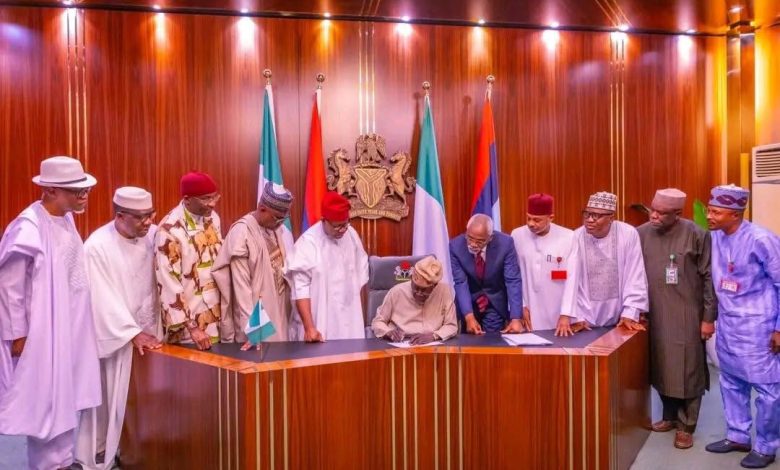
President Bola Ahmed Tinubu has signed into law the Electoral Act, 2022 Repeal and Re Enactment Bill 2026, marking a significant milestone in Nigeria’s electoral reform process ahead of the 2027 general elections.
The signing of the new Electoral Act followed its passage by the National Assembly on Tuesday, February 17, 2026, after months of extensive deliberations, stakeholder consultations, and amendments by both the Senate and the House of Representatives.
The harmonised version of the bill was subsequently transmitted to the President for assent in accordance with constitutional provisions.
The revised legislation repeals the Electoral Act 2022 and introduces updated provisions aimed at strengthening the credibility, transparency, and efficiency of Nigeria’s electoral system.
Lawmakers explained that the amendments were necessitated by practical challenges encountered during the implementation of the 2022 Act, as well as the need to align Nigeria’s electoral framework with emerging democratic standards and technological advancements.
Speaking shortly after signing the bill into law, President Tinubu reaffirmed his administration’s commitment to deepening democracy and ensuring free, fair, and credible elections.
He noted that the new Electoral Act reflects the collective will of Nigerians and demonstrates the resolve of the government to consolidate democratic gains achieved since the return to civil rule in 1999.
The President commended members of the National Assembly for what he described as their patriotism and diligence in reviewing the law.
He emphasized that a robust electoral framework remains fundamental to political stability, national unity, and sustainable development.
Key highlights of the new Act include clearer guidelines on the use of technology in elections, enhanced timelines for political party primaries, strengthened regulations on campaign financing, and stricter penalties for electoral offences.
The law is also expected to provide improved operational clarity for the Independent National Electoral Commission in the conduct of elections at federal and state levels.
Political observers believe that the enactment of the new Electoral Act well ahead of the 2027 polls will allow sufficient time for political parties, candidates, and electoral stakeholders to familiarise themselves with its provisions.
They argue that early reforms reduce uncertainties and foster public confidence in the electoral process.
With the Electoral Act 2026 now in force, attention is expected to shift to its implementation, particularly by electoral authorities and political actors, as preparations gradually commence for the 2027 general elections.
The development is widely regarded as a pivotal step in shaping the legal framework that will guide Nigeria’s next electoral cycle.




