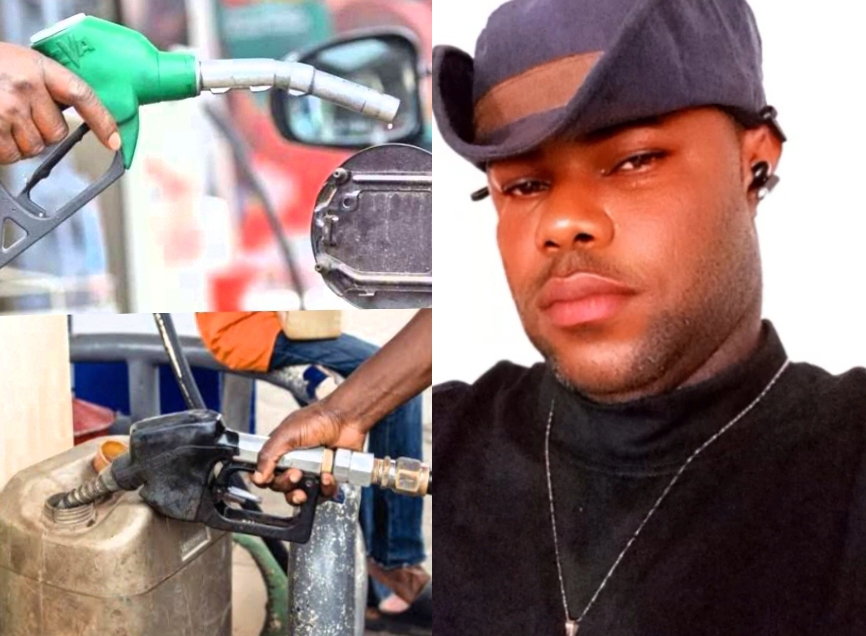
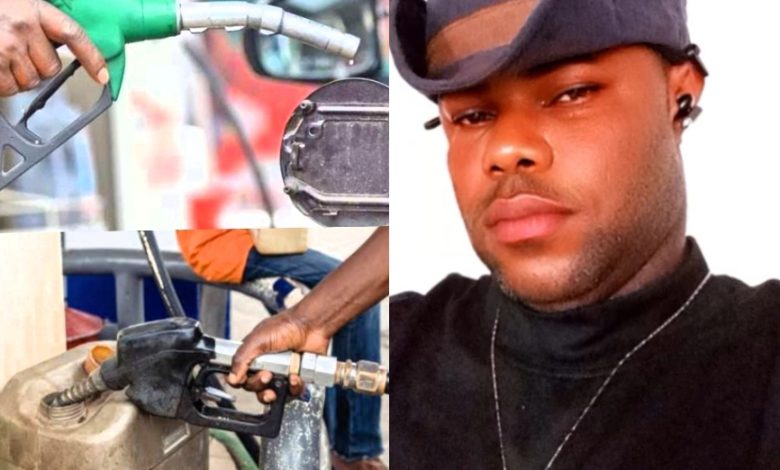
With Responsible Leadership, Fuel Should Be ₦150 Per Litre in Nigeria, Says Journalist

By Freedom Jidechi
A Political Journalist and the Publisher of ThePressman Newspaper, Deacon Dan Opara (Danjay), has expressed strong concern over the persistent rise in the cost of Premium Motor Spirit, PMS, commonly known as petrol/fuel
in Nigeria, stating that the commodity should ordinarily sell for about ₦150 per litre if the nation had effective and responsible leadership.
Dan Opara, who is the Publisher and Editor-In-Chief of ThePressman Newspaper, an online news platform, made this assertion while speaking on the economic realities facing millions of Nigerians despite the country’s enormous natural resources.
According to him, Nigeria remains one of the world’s notable crude oil producing nations, yet the majority (millions) of its citizens continue to endure severe economic hardship largely due to poor leadership and ineffective policy implementation over the years.
He noted that the contradiction between the country’s resource wealth and the level of suffering among the populace has continued to generate widespread debate among Nigerians, many of whom believe that petrol should be affordable and accessible to ordinary citizens.
Dan Opara explained that if Nigeria were refining its crude oil locally, curbing crude oil theft and illegal bunkering, reducing heavy dependence on imported petroleum products, and minimizing excessive taxes, logistics costs, and middlemen in the distribution chain, petrol could reasonably sell between ₦150 and ₦250 per litre, or even less in some economic projections.
He further stated that such a price range would only be possible under certain economic conditions, including efficient local refining capacity, a stable exchange rate, reduced operational bottlenecks within the petroleum sector, and deliberate government support for domestic production and distribution.
Highlighting the reasons behind the current surge in petrol prices across the country, the political journalist pointed out that several policy and economic factors have contributed to the situation presently confronting Nigerians.
Among these factors, he identified the removal of fuel subsidy in 2023, the country’s continued reliance on imported refined petroleum products, the persistent depreciation of the naira against the United States dollar, and rising transportation and distribution costs within the deregulated petroleum market.
As a result of these realities, petrol currently sells between ₦1,000 and ₦1,300 per litre in many parts of Nigeria, depending on location, availability, and prevailing supply conditions.
Speaking further, Danjay emphasized that fuel prices could become more affordable if Nigeria successfully implements key structural reforms within the petroleum sector.
He stressed the importance of ensuring the full operational capacity of local refineries, including the privately owned Dangote Refinery, while also revamping government owned facilities managed by the Nigerian National Petroleum Company Limited, such as the refineries in Port Harcourt and Kaduna.
In addition, he called for the construction of more functional refineries across oil producing regions of the country, particularly within the South East and other producing states, in order to enhance domestic refining capacity and reduce reliance on imported products.
The journalist also advocated for stronger monetary policies that would help stabilize the naira against the United States dollar, alongside the development of more efficient pipeline networks and distribution systems capable of reducing transportation costs and supply disruptions.
While acknowledging the complex realities of global petroleum economics, Opara remarked that even oil producing nations rarely sell petrol at extremely low prices unless the government deliberately provides heavy subsidies for domestic consumption.
Nevertheless, he maintained that Nigeria possesses the capacity to significantly reduce fuel costs if proper economic management, responsible leadership, and effective policy execution are put in place.
As at Tuesday, March 10, 2026, petrol was observed to be selling at approximately ₦1,300 per litre in Owerri, Imo State, a development that continues to place considerable financial strain on residents and businesses across the state and the country at large.