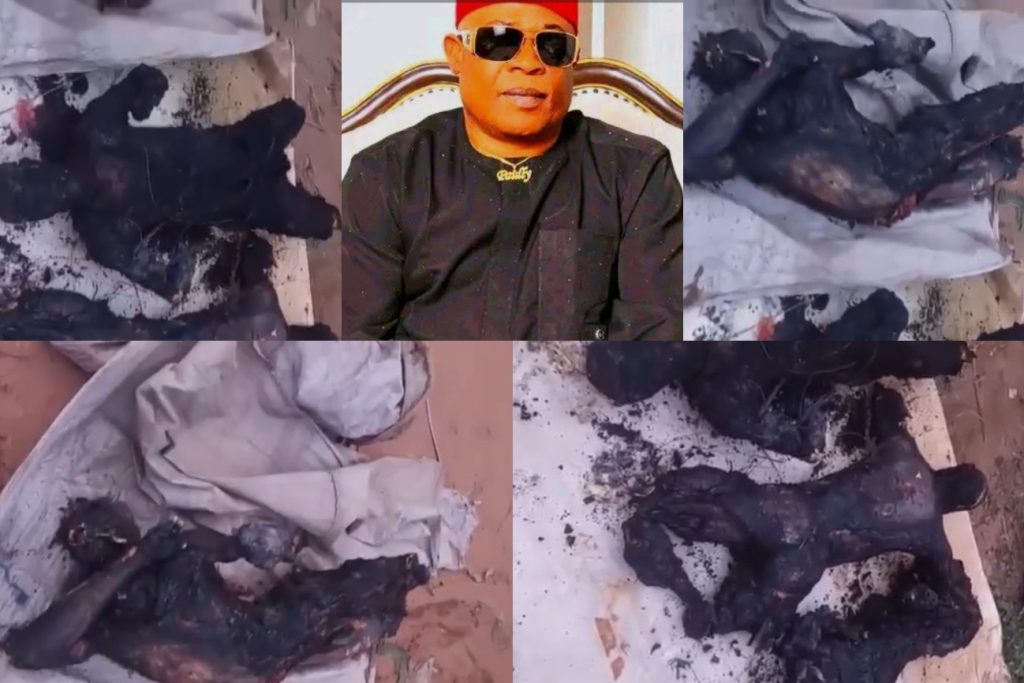
Ohaji/Egbema LGA: Killing of Traditional Ruler, Eze Ekwueme, Four Security Personnel Demands Urgent, Thorough Investigation

The tragic killing of His Royal Highness, Eze Barr. Paulinus Ekwueme, the Traditional Ruler of Ochia Autonomous Community in Ohaji/Egbema Local Government Area of Imo State, alongside four security personnel, has raised serious concerns that demand urgent and comprehensive investigation.
The tragic incident, which occurred on Friday, April 10, 2026, should not be dismissed as a routine act of violence.
Rather, it must be carefully examined as a possible conspiracy linked to longstanding community tensions and unresolved disputes within the area.
While the visit of the Commissioner of Police, CP Audu Garba Bosso, to the scene is commendable, it represents only a preliminary step.
Security agencies must intensify efforts to uncover the full circumstances surrounding the gruesome killing of a monarch widely regarded as peaceful, intellectual, and committed to dialogue.
Eze Ekwueme was not only a traditional ruler but also a trained lawyer, respected journalist, and former President General of Awara Autonomous Community before the creation of Ochia Autonomous Community.
His leadership was defined by vision and initiative, particularly in facilitating the attainment of autonomous status for Ochia Community, which led to his emergence as its traditional ruler with the support of key stakeholders.
However, his reign was marked by challenges, including reported tensions between Ochia and neighbouring communities, especially over host community rights tied to oil exploration activities involving Walter Smith Oil Company.
Disputes over inclusion, control, and benefit sharing appear to have contributed significantly to divisions within the area.
Following his death, social media platforms have been flooded with unverified allegations portraying the monarch negatively, including claims of financial misconduct and alleged complicity in violence.
These accusations remain unproven and risk distorting public perception.
It is important to emphasize that financial transactions between oil companies and host communities are typically governed by structured agreements requiring multiple signatories, rather than the authority of any single individual.
Reports indicate that the late monarch had spent several years abroad, particularly in the United States, and had recently returned home to celebrate the Easter season with his people.
He was allegedly invited to a meeting in Ochia, where he was ambushed, overpowered, and brutally killed alongside four security personnel, while their vehicle was reportedly set ablaze. If confirmed, this points to a premeditated attack that must be thoroughly investigated and prosecuted.
Sources within the community further revealed that certain cult groups, allegedly led by rival figures identified as Mr. Achis and Mr. Acid, have been linked to acts of violence in the area over the past four years, including killings, kidnappings, and the burning of houses.
The group associated with Mr. Acid, reportedly made up of individuals from Ochia Community, has been accused in connection with the ambush that resulted in the deaths of the traditional ruler and the four security personnel.
To establish the truth, investigators must examine all available evidence, including the minutes of the meeting the monarch was invited to attend, identify all individuals present, and assess the underlying disputes within the community.
The oil company operating in the area should also be required to provide transparent details of its engagements with the community and its leadership.
There are also claims of a prolonged power struggle over traditional authority, particularly involving factions from Umuokuzu, who reportedly questioned the legitimacy of Eze Ekwueme’s stool.
Such tensions, if verified, may provide critical insight into the root causes of the crisis.
What remains undeniable is that Eze Ekwueme can no longer respond to the allegations circulating in the public space.
It would be unjust to allow unverified narratives, whether driven by rivalry or misinformation, to define his legacy without a fair and thorough inquiry.
The people of Ochia Autonomous Community are urged to cooperate fully with security agencies to ensure that an accurate and credible account of events is established.
Justice must not only be done but must be seen to be done.
Furthermore, the President General of Ochia Community, identified as Chief Akaraka, along with other community leaders present at the meeting that preceded the killing of the five victims and the burning of their bodies alongside their vehicles, must be thoroughly investigated as part of efforts to uncover the truth.
Until all facts are established, this tragic incident must not be treated as a closed case, but as a grave matter requiring transparency, accountability, and justice.