2027: Uzodimma’s Senate Ambition to Reshape Imo Politics Ahead of Guber Transition

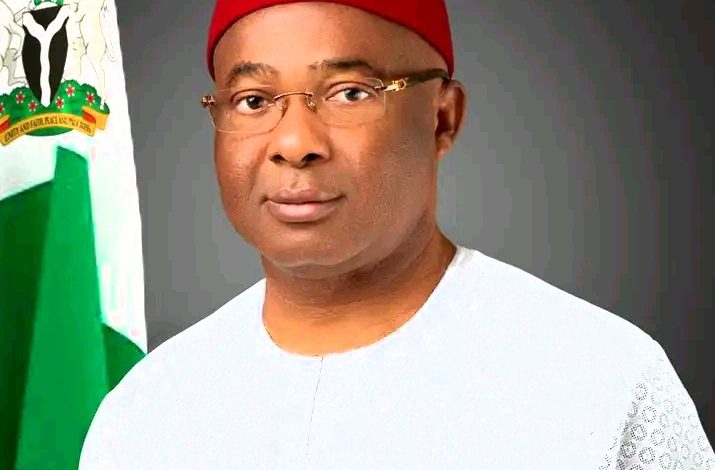
By Dan Opara
As Imo State approaches another decisive political cycle, developments as of April 2026 point to a carefully orchestrated transition strategy by Governor Hope Uzodimma, one that could redefine the state’s power structure while extending its influence within national politics.
As the acknowledged apex leader of the APC in Imo, the governor’s next moves are already shaping conversations across party lines.
Imo remains one of Nigeria’s off cycle states, a situation created by judicial pronouncements that altered its electoral timetable.
With governorship primaries expected to conclude towards the end of 2026 and party candidates to be firmly established by early 2027, political attention has increasingly shifted to the succession plan of the incumbent governor, whose second tenure is scheduled to end in January 2028.
Available political signals suggest that Governor Uzodimma is managing a delicate balance between consolidating his hold on the state and positioning himself for a return to the National Assembly as the Senator representing Orlu Zone.
This anticipated senatorial bid in 2027 is widely interpreted as a strategic step toward a broader legislative ambition, potentially placing him in contention for a principal leadership role in the Senate.
If realised, such a transition would elevate Uzodimma from a state executive to a national power broker, with significant influence across federal politics and within the South East geopolitical zone.
This projection underscores the importance of his current political calculations and the precision with which they are being executed.
At the centre of this unfolding scenario is the Imo Charter of Equity, a longstanding political understanding that advocates the rotation of governorship among the state’s three senatorial zones.
Having emerged from Orlu Zone, the governor has repeatedly indicated his willingness to support the transfer of power to Owerri Zone in 2027.
However, emerging and unconfirmed reports suggest internal pressures within the government, including speculations surrounding the position of the Deputy Governor, Lady Chinyere Ekomaru.
These developments, if substantiated, may be part of broader efforts to recalibrate the political equation ahead of the transition, particularly in the search for a preferred successor from Owerri Zone.
Within the APC, signs of internal realignment are becoming increasingly visible.
Should Uzodimma secure a seat in the Senate, he is expected to consolidate his authority as the dominant political figure in the state, thereby placing him in a strong position to influence the emergence of the party’s governorship candidate.
In this context, the likelihood of a purely open contest appears slim.
Instead, the process may lean towards consensus building around a preferred aspirant, most likely a technocrat or a loyal political ally from Owerri Zone.
While such an approach may ensure continuity, it also carries the risk of internal dissent.
Stakeholders from Orlu Zone, long accustomed to political dominance, may resist any arrangement perceived as a complete erosion of their influence.
At the same time, aspirants from Owerri and Okigwe zones have intensified consultations, forging alliances and testing grassroots acceptance ahead of what is shaping up to be a highly competitive race.
Notable figures such as Sam Amadi and Ezenwa Onyewuchi have already featured prominently in political discussions, reflecting the depth of ambition within the Owerri bloc.
However, the multiplicity of interests within the zone could complicate efforts to present a unified front, thereby creating opportunities for opposition parties to exploit internal divisions within the APC.
Beyond intra party dynamics, the broader electoral environment is expected to be fiercely contested.
Opposition parties are likely to frame their campaigns around equity, inclusiveness, and governance performance, while the APC will rely on incumbency advantages at both state and federal levels to project continuity and stability.
Another critical factor is the potential onset of a lame duck phase in the latter part of Uzodimma’s administration.
As the succession process gains momentum and a preferred candidate begins to emerge, political loyalties may gradually shift toward the incoming power structure.
This realignment could subtly weaken the governor’s immediate control over the state’s political machinery.
Nevertheless, Uzodimma’s long term strategy appears firmly anchored in sustaining political relevance beyond Douglas House.
By influencing the outcome of the governorship election and facilitating the emergence of a loyal successor, he stands to retain considerable leverage over the state’s political direction while advancing his national aspirations.
The 2027 governorship election will ultimately serve as a referendum on this strategy.
A broadly acceptable candidate with cross zonal appeal could strengthen the APC’s dominance, while any perception of imposition may provoke voter resistance and alter the electoral landscape in favour of opposition forces.
As the countdown to 2027 intensifies, Imo State stands at the threshold of a significant political transition.
The interplay between zoning expectations, party supremacy, individual ambitions, and voter sentiment will define the outcome.
In the final analysis, the decisions taken in the coming months will not only determine the next occupant of Douglas House but will also shape the enduring political legacy of Governor Hope Uzodimma within Nigeria’s evolving power structure.