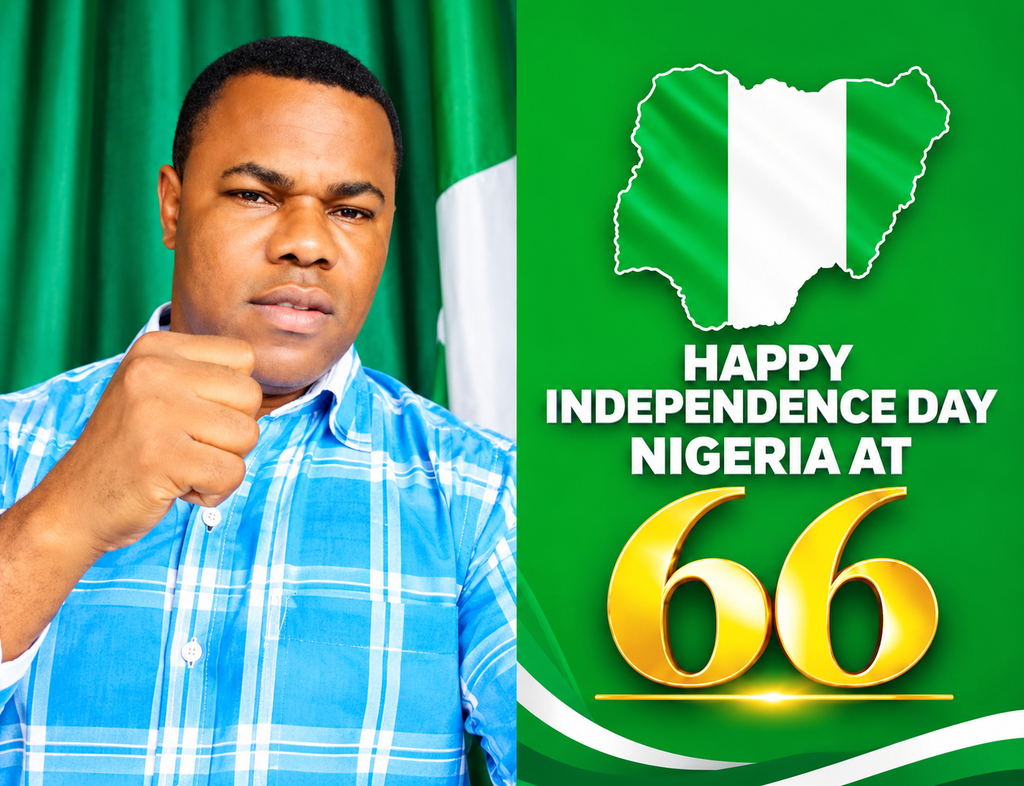
Nigeria at 66: Reflecting On Our Past, Confronting Our Present, Reimagining The Future We Desire, Says Danjay ThePressman

October 1, Nigeria at 66: After 1960, The Leadership We Need for a Better Future
ThePressman Publisher, Deacon Dan Opara (Danjay), Calls for Credible Leadership, Responsible Voting Renewed National Commitment
Nigeria celebrated its 66th Independence Anniversary on Thursday, October 1, 2026, marking another important milestone in the nation’s journey since independence in 1960.
The Federal Government officially declared October 1 a public holiday to commemorate the anniversary.
For me, as Danjay, Publisher of ThePressman Newspaper, www.thepressman.com.ng , our country-Nigeria at 66 should not only be about ceremonies, speeches and celebrations but by taking positive actions in implementing government politics and by obeying the law of the law.
It should also be a moment of sober reflection on where we came from, where we are today and where we intend to go as a nation.
The aftermath of 1960 raises a fundamental question. What would Nigeria look like if our political leaders consistently placed the interests of the people above personal ambition, political advantage and selfish interests?
Nigeria is naturally endowed with enormous human and natural resources, including petroleum, natural gas, coal, limestone, iron ore, gold and many other mineral resources, as well as resources that remain insufficiently explored or developed.
Yet, despite these advantages, millions of Nigerians continue to struggle with economic hardship and inadequate public services.
In my opinion, one of Nigeria’s greatest challenges has been the failure to consistently translate our enormous national resources into sustainable improvements in the lives of ordinary citizens.
We should be living in a country with reliable electricity, functional road networks, effective security, quality hospitals, well-equipped schools, productive industries, decent employment opportunities and an economy capable of providing dignity and opportunity for its citizens.
Instead, many Nigerians continue to experience hardship.
Our population is now well above 200 million, while the challenges confronting households, businesses and communities remain substantial.
The situation is also reflected in the migration of skilled professionals.
The World Health Organization and the African Health Observatory have documented significant challenges involving the retention and migration of Nigerian health professionals, including doctors, nurses and other skilled personnel.
Poor remuneration, working conditions and limited opportunities are among the factors identified in the health workforce migration crisis.
This is what is commonly described as brain drain, and it is not limited to the medical profession.
Nigeria needs its doctors, nurses, engineers, teachers, scientists, technologists and other professionals to have sufficient opportunities and conditions to build their careers and contribute to national development.
As we move towards the 2027 General Elections, therefore, the responsibility does not belong only to politicians. It also belongs to the electorate.
I urge Nigerians, particularly citizens in rural communities, to obtain their Permanent Voter Cards and ensure that they are properly registered and prepared to participate in the electoral process. Citizens should come out en masse and exercise their constitutional right to vote.
The 2027 elections should be approached with seriousness. Voters should examine the records, character, programmes, competence, integrity and commitments of candidates and make their choices based on issues and the public interest, rather than allowing money, ethnicity, religion, intimidation, sentiment or party affiliation alone to determine their decisions.
Political parties are important to democracy, but the ultimate responsibility belongs to the voter.
Nigerians should carefully assess the candidates presented by the different political parties and decide which candidates they believe can best represent their interests.
Our message is particularly important to the people at the grassroots.
Those in villages and rural communities should not assume that elections are matters reserved for politicians in Abuja or state capitals.
The quality of representation directly affects electricity, roads, schools, hospitals, security, agriculture, employment and other basic necessities.
I therefore call on Nigerians to participate actively and peacefully in the 2027 electoral process, while demanding transparency, accountability and credible leadership from every political party and candidate.
As a Christian and as a journalist, I believe that leadership should be regarded as a responsibility and not merely as an avenue for personal enrichment.
The language of “demonic” leadership may express the depth of public frustration, but what Nigeria needs in practical terms is leadership characterised by integrity, compassion, accountability, competence and respect for human dignity.
Nigeria does not lack potential. What we need is the determined and responsible conversion of that potential into measurable development.
At 66, our independence should remind us that the future of Nigeria cannot be left entirely in the hands of political office holders. The people also have a role to play.
Let Nigerians obtain their voter cards, study the candidates, understand the issues and participate peacefully.
Let the electorate make informed choices without allowing party affiliation, ethnic identity, religious sentiment or temporary inducements to replace thoughtful consideration of the national interest.
The Nigeria we desire will not be built by politicians alone.
It will be built when citizens, leaders and institutions collectively accept their responsibilities.
Nigeria at 66, the future remains a collective responsibility.
Deacon Dan Opara (Danjay),
Publisher, ThePressman Newspaper,
07030811559.